Northern Manufacturing
Quote
Menu
Stainless steel food-grade processing equipment fabricated by Northern Manufacturing
Part of Stainless Fabrication

Food-Grade Stainless Steel Fabrication for Food and Beverage Equipment

Process and non-contact food equipment, bead-blasted and pickled, built in a dedicated stainless-only space.

Qualified ISO 9001:2015 AWS D1.6 ASME BPVC Section IX
Docs available MTRs Weld maps WPS/PQR NDE PMI CoC
60 +

AWS-Certified Welders

40,000 sq ft

Stainless-Only Space

55 ft

Passivation Spray Booth

1951

Fabricating Since

Mixer housings, hoppers, and process frames in 304/316L: full-penetration GTAW on product-contact welds when the spec calls for it, then bead-blasted and pickled in-house.

Northern Manufacturing fabricates custom stainless steel equipment for food and beverage OEMs, equipment integrators, and processing plants. Most of this work is process and non-contact equipment: frames, housings, hoppers, conveyors, and tanks in 304 and 316L. Food-contact surfaces increasingly move to plastics, so Northern’s value is the stainless equipment around them, finished by bead blasting and pickling and passivation. When a drawing invokes 3-A or ASME BPE, product-contact welds are full-penetration GTAW ground crevice-free and we build to the standard. All work runs through our 40,000 sq ft stainless-only production space, where dedicated tooling, consumables, and welders prevent carbon steel cross-contamination on every assembly.

60+ AWS-certified welders. ISO 9001:2015 certified (AVU Registrations). ASME BPVC Section IX qualified welding procedures for P8 austenitic stainless. In-house pickling and passivation per ASTM A380/A967 in a 55-foot spray booth.

Equipment We Build

Most food and beverage work is process and non-contact equipment. What Northern regularly fabricates:
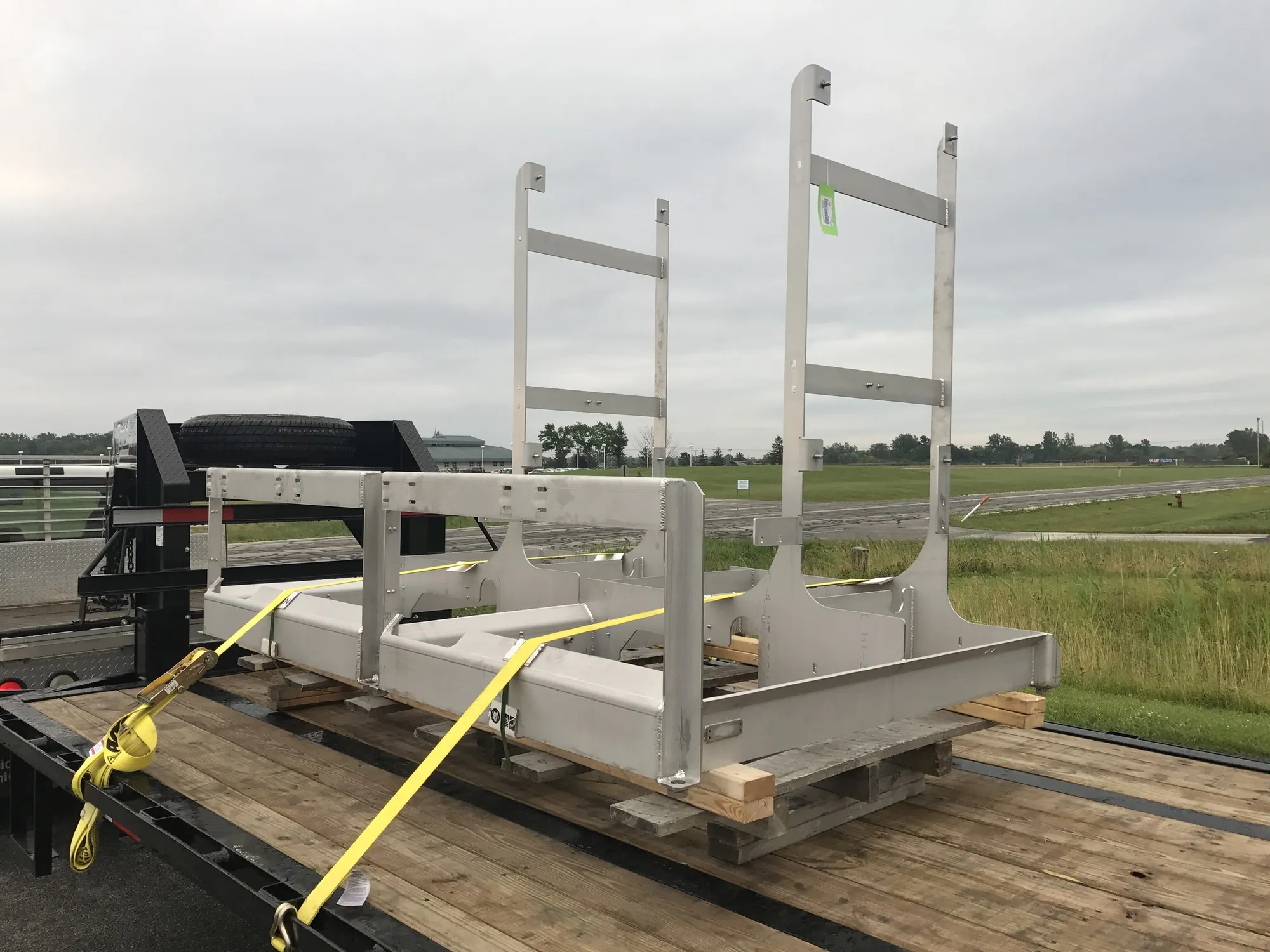
Stainless steel food processing frame loaded on a trailer in the outdoor lot at Northern Manufacturing

Conveyor Frames & Supports

Stainless structural work for processing lines where washdown exposure demands corrosion resistance from the frame. Most of this work is non-contact, finished by bead blasting and passivation.
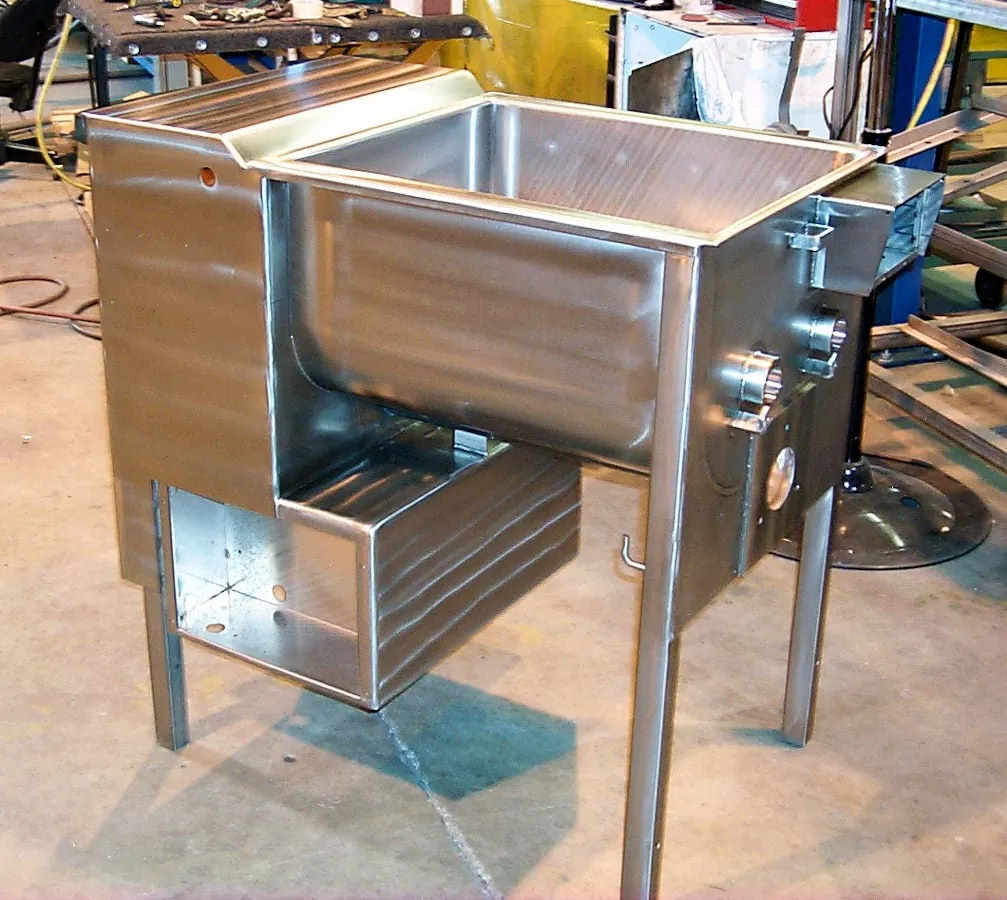
Stainless steel grinding tub and hopper fabricated for food processing equipment

Hoppers, Chutes & Transitions

Sheet and plate fabrications with smooth interior surfaces for product flow and cleanability.
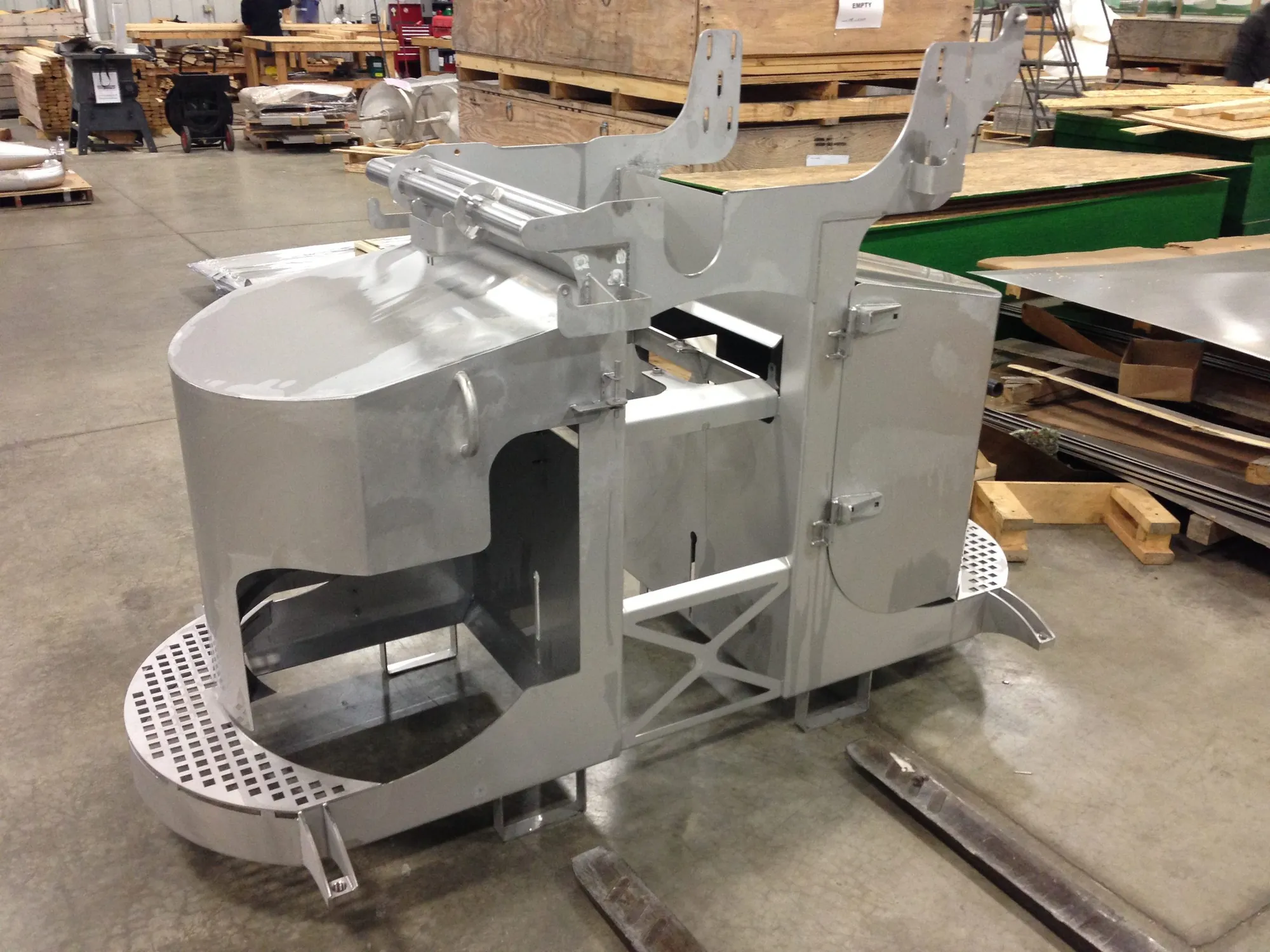
Skid-mounted stainless steel process frame with a perforated grate deck in the Northern Manufacturing shop

Process Frames & Skid-Mounted Systems

Skid-mounted stainless assemblies with piping, valving, and tank integration, fabricated as a unit and tested before shipment.
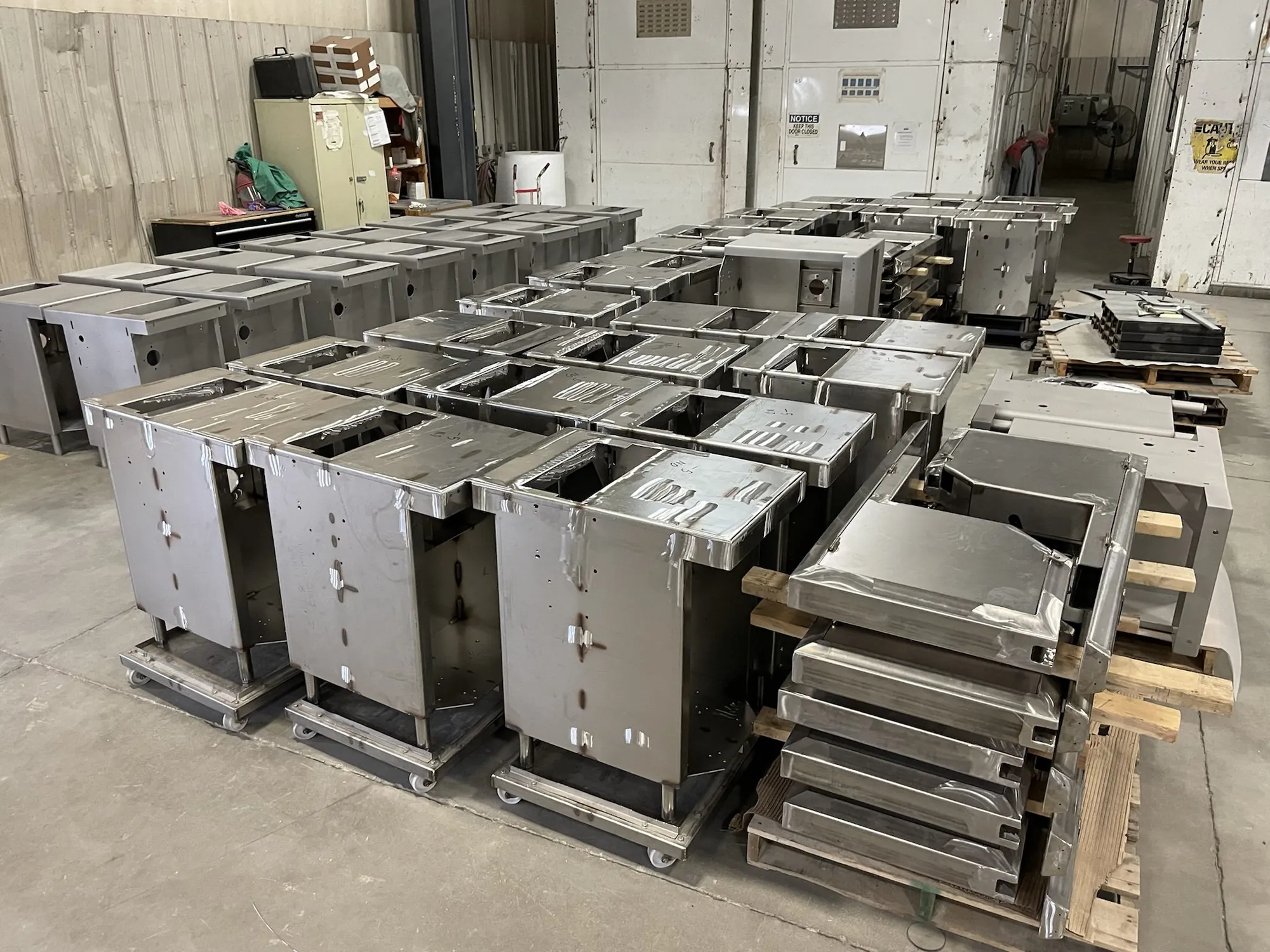
Rows of fabricated stainless steel equipment bases and enclosures staged in the Northern Manufacturing shop

Equipment Housings & Enclosures

304 and 316L housings, guards, and enclosures built to the weld quality and finish your drawing calls out.
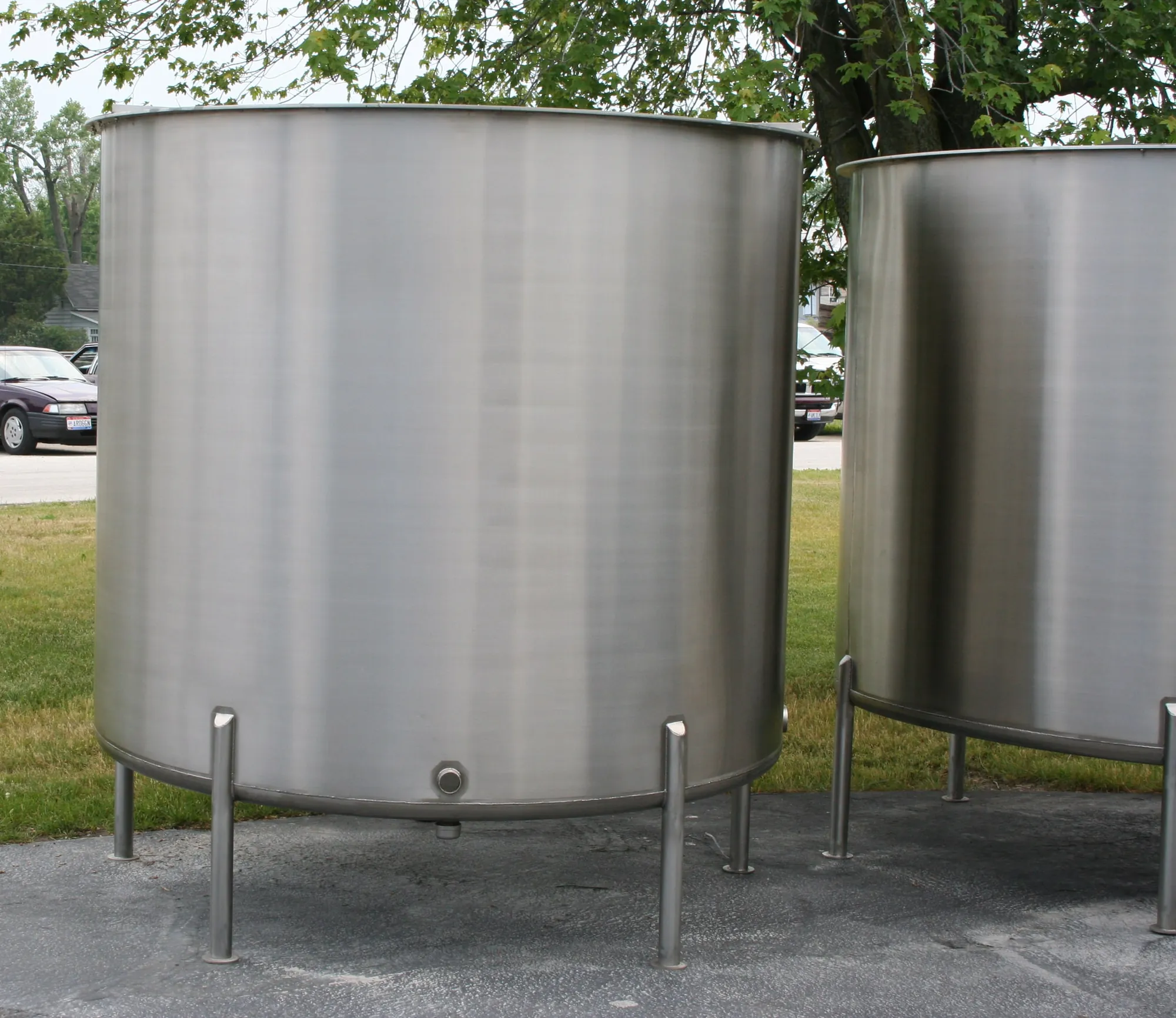
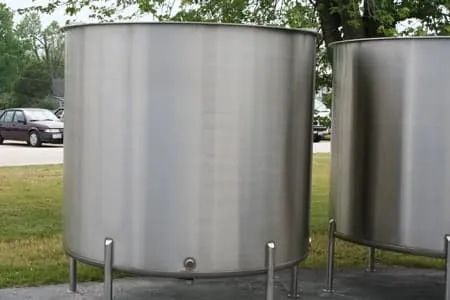
Fabricated stainless steel tanks staged in the outdoor lot at Northern Manufacturing

Sanitary & Dairy Tanks (to spec)

When the spec calls for it, batch, hold, and dairy vessels built to 3-A or ASME BPE design requirements, with product-contact welds ground crevice-free. A smaller part of our food work, scoped at quote.

304L and 316L for Food Equipment

304L handles most food processing environments, but 316L is the standard choice for equipment that contacts acidic foods, brines, high-chloride cleaning agents, or sustained moisture. The molybdenum addition in 316L improves resistance to chloride pitting and crevice corrosion, which matters in equipment that is regularly cleaned with caustic or acid solutions.

The molybdenum in 316L is what survives the daily caustic washdown.
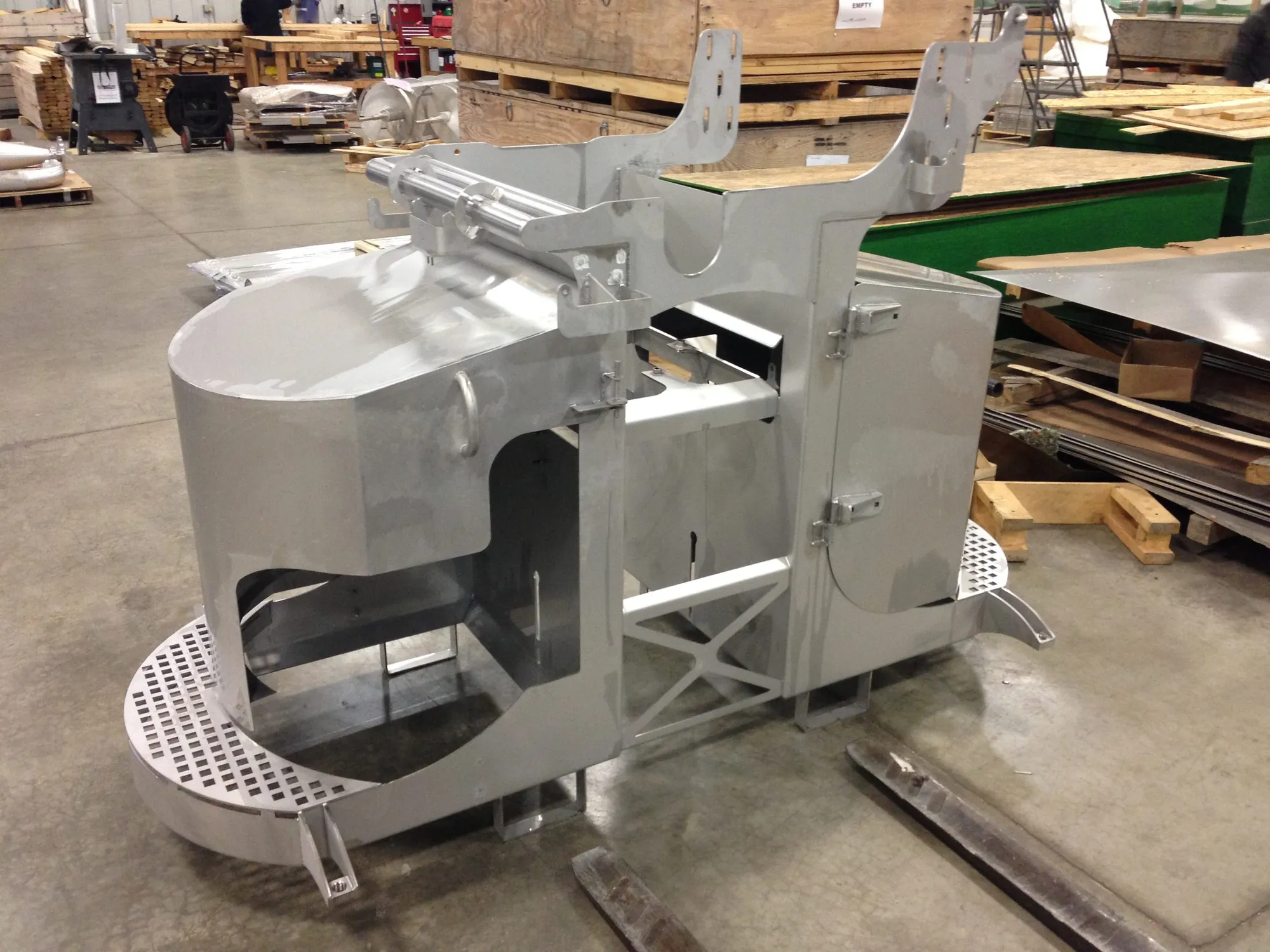
Freshly fabricated stainless steel machine base with a curved housing and perforated circular platform on the Northern Manufacturing shop floor
Grade Chloride tolerance Typical application Cost vs. 304L
304L Low-moderate chloride, dry environments Structural frames, ductwork, non-contact surfaces Baseline
316L Moderate-high chloride, wet/acidic Product-contact surfaces, tanks, piping, CIP systems ~15-20% premium

We stock 316L plate from 20-gauge through 1 inch in standard sheet sizes, with heavy plate up to 2 inches sourced through our distributor network.

Welding Food and Beverage Equipment

Food-grade fabrication lives or dies at the weld. A weld bead with undercut, overlap, or incomplete penetration creates a crevice where bacteria colonize and cleaning solutions cannot reach. For product-contact surfaces, Northern specifies full-penetration GTAW (TIG) welding with autogenous or matching filler rod to produce smooth, crevice-free joints that pass visual and borescope inspection.

All welding procedures are qualified per ASME BPVC Section IX for P8 austenitic stainless. Welders hold active qualifications to AWS D1.6 (Structural Welding Code for Stainless Steel) and are recertified on a continuous cadence. When your drawing calls out a specific WPS, procedure qualification records and welder continuity logs are available on request.
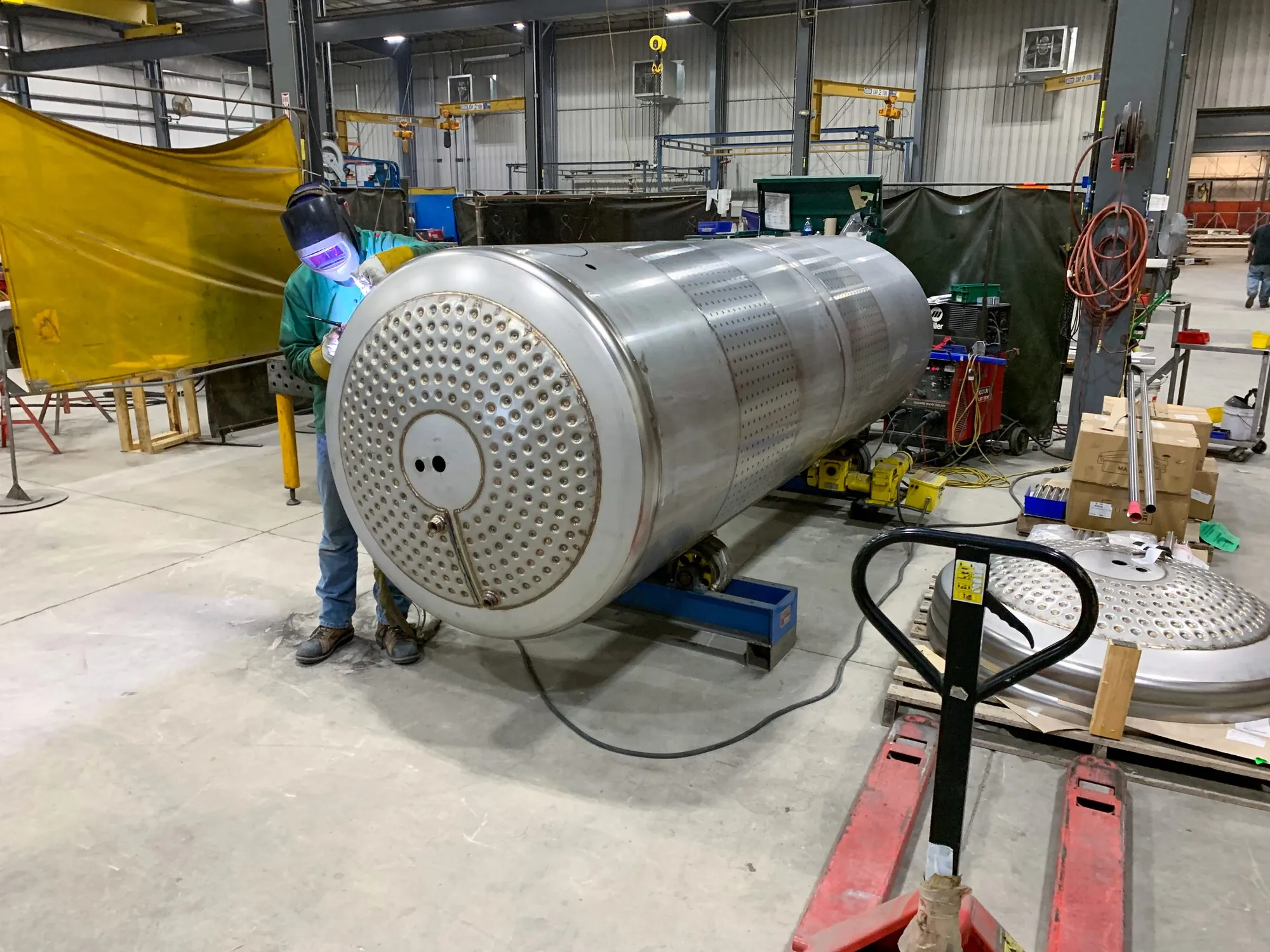
Northern Manufacturing welder running a manual GTAW pass on a stainless steel heat exchanger tubesheet

Finishing: Bead Blast, Pickle, Passivate

Most food and beverage equipment is finished by bead blasting and pickling/passivation, not mirror polish. Northern controls finish from forming through delivery, to the level your spec calls out.

01

Bead Blasting & Pickling/Passivation

A uniform, non-directional matte finish from bead blasting, then ASTM A380 pickling and A967 passivation in our 55-foot booth to strip heat tint and restore the passive layer. This is the finish most food and beverage equipment calls for.

02

Mechanical Polishing to Spec

When the drawing calls for a directional or higher-cosmetic finish, controlled grinding and polishing hold a specified Ra. We are a fabricator, not a dedicated polishing house, so mirror and 3-A polish finishes are scoped at quote, and we tell you straight when the work belongs with a polishing specialist.

03

Electropolishing (coordinated)

For the lowest surface roughness, electropolishing is coordinated as an outside finishing step.
Contamination Control

Carbon steel contamination on food-grade stainless is not a cosmetic defect. Free iron particles embedded during grinding, forming, or handling initiate surface corrosion that can contaminate product and fail sanitary audits.

40,000 sq ft of stainless-only production space.

Tooling, grinding wheels, clamps, work tables, and consumables are dedicated to stainless. No carbon steel work runs in this space. Free-iron verification per ASTM A380 is performed on critical-service assemblies before passivation.

Documentation Available on Request

We can provide the documentation your quality audit needs, with the records your specification and purchase order require.

Material Test Reports (MTRs) traced by heat number from mill cert to final assembly
Welder continuity logs confirming active qualification at time of fabrication
Pickling and passivation certification per ASTM A380/A967
Weld maps with WPS references for every joint
Dimensional inspection reports per your drawing tolerances
Certificate of Conformance (CoC) to your purchase order requirements
On request PMI records Radiographic testing reports Ferrite content measurement Surface roughness (Ra) verification

Have a stainless project for food & beverage?

Or call (419) 898-2821

Request a Quote

Shop capabilities for this industry

Every food & beverage project draws on specific fabrication processes. These are the ones we use most for this industry.

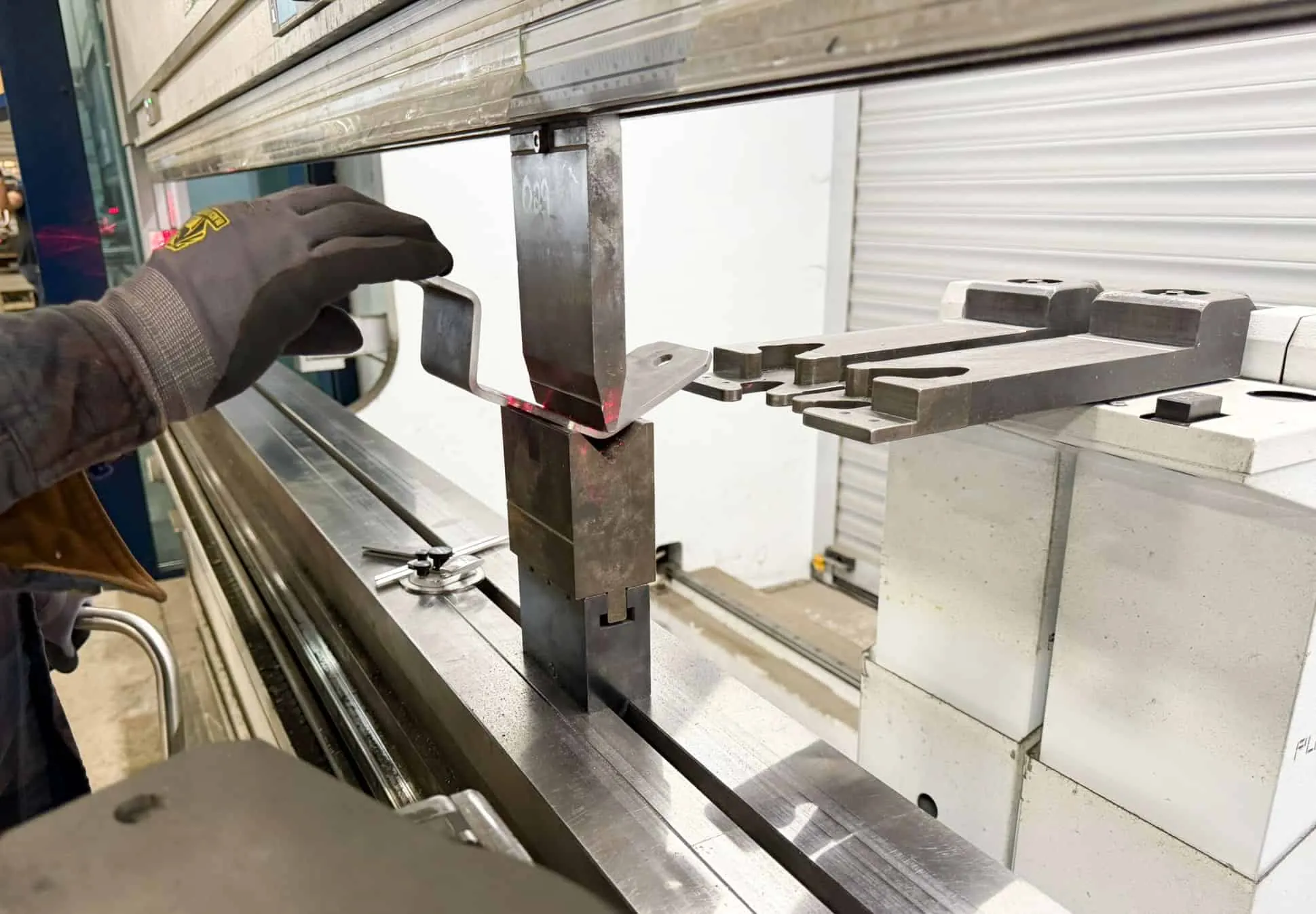
Operator forming a stainless steel bracket on a CNC press brake at Northern Manufacturing, with laser-cut blanks staged beside the dies

Precision Bending and Forming Services

Five CNC press brakes, two Trumpf TruBend 5320s among them, form stainless from sheet gauges through heavy plate, with springback compensation set per grade and formed dimensions verified against your CAD model before parts move to welding.

Northern Manufacturing welder running a manual GTAW pass on a stainless steel heat exchanger tubesheet

Stainless Steel Welding Services

60+ AWS-certified welders running ASME BPVC Section IX qualified procedures across nine processes (GTAW, GMAW, FCAW, SAW, robotic, K-TIG, and more) on stainless, duplex, and nickel alloys.

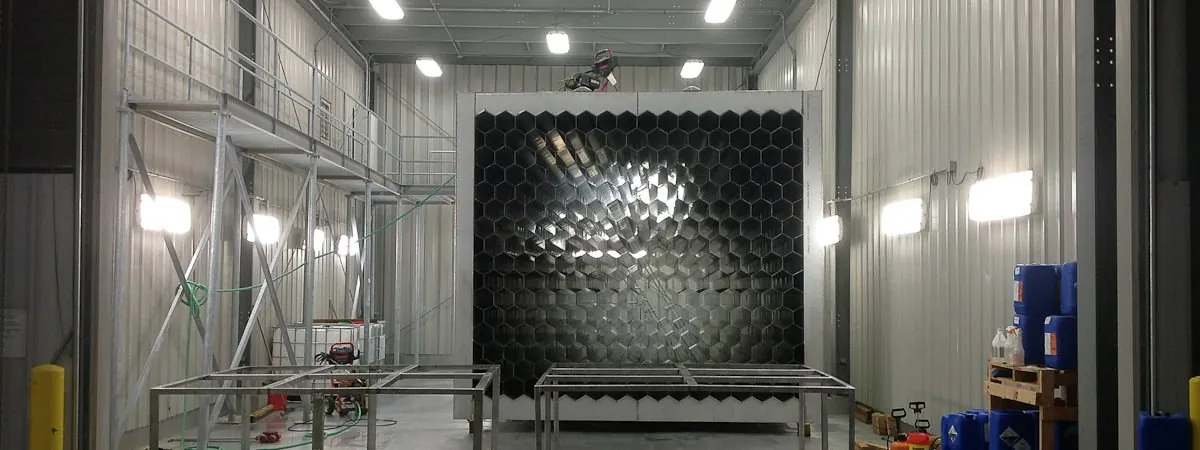
Massive hexagonal honeycomb tube bundle standing inside the 55-foot spray pickling booth at Northern Manufacturing

Stainless Steel Pickling and Passivation

Welding leaves stainless with heat tint, free iron, and a chromium-depleted layer that fails service life if it ships out the door. We pickle and passivate to ASTM A380 and A967 in a 55 ft booth, and run copper-sulfate verification (ASTM A967 Practice D) when your specification or purchase order calls for it.

Frequently asked questions

What engineers and procurement managers ask us about food & beverage fabrication.

Can you fabricate to 3-A sanitary standards or ASME BPE?

Yes. When your drawing or specification invokes 3-A sanitary standards or ASME BPE design requirements, the traveler and inspection points are built around them from the first operation: full-penetration GTAW product-contact welds ground crevice-free, drainable geometry with dead-leg lengths held to your standard, and the surface finish your standard specifies. Welding procedures are qualified per ASME BPVC Section IX for P8 austenitic stainless, and the documentation records each requirement the standard imposes.

What surface finishes can you provide on food and beverage equipment?

Most food and beverage equipment is finished by bead blasting and pickling/passivation, which is what the majority of our food customers select. When the spec calls for a polished finish, we hold a specified Ra through controlled grinding and polishing, and we scope higher-cosmetic or mirror finishes at quote, since we are a fabricator rather than a dedicated polishing house. After mechanical finishing, assemblies are passivated per ASTM A967, with copper sulfate verification per Practice D when your specification or purchase order calls for it, and we provide measured Ra readings where the spec requires proof.

Is passivation done in-house or sent to an outside processor?

In-house. Our 55-foot spray booth pickles and passivates complete assemblies per ASTM A380 and A967 inside the 40,000 sq ft stainless-only production space, so finished equipment is never trucked to a third party and handled again after final cleaning. Citric chemistry is the default for food and dairy work, and when your spec requires it, we provide the verification records with the certification, as your spec requires.

What documentation supports a supplier audit or quality review?

We fabricate under our ISO 9001:2015 quality system and can provide material traceability by heat number, weld maps tied to qualified procedures, welder continuity logs, passivation certification per ASTM A380/A967, and a Certificate of Conformance, with the records your specification and purchase order call for. PMI records, radiographic testing reports, ferrite measurement, and surface roughness verification are added when your specification or auditor requires them.

Send us a drawing. We'll tell you what it takes.