
Duplex Stainless Steel Fabrication: 2205, 2507 & LDX 2101
We build Duplex 2205, 2507, and LDX 2101 weldments to your engineering drawings, holding narrow heat-input and interpass limits with keyhole GTAW (K-TIG), ferrite checks on production welds, and 55-foot in-house pickling.
Capacity
60 +
AWS-certified welders
3
Duplex grades run
78
Welding bays
1951
Fabricating since
The duplex family we fabricate
Built to your print, with heat input and ferrite controlled
Duplex stainless steels pair ferritic strength with austenitic chloride resistance in a roughly 50/50 microstructure, delivering about twice the yield strength of 316L. That dual-phase balance only survives fabrication when heat input, interpass temperature, and pickling chemistry are controlled to procedure.
A higher-strength lean duplex alternative to 304L and 316L where structural efficiency reduces plate weight.
Roughly twice the yield strength of 316L with strong chloride stress-corrosion resistance; ASME IX P10H procedures include keyhole GTAW (K-TIG, 0.094 to 0.376 in), PAW, and hybrid laser.
Specified for severe chloride and elevated-temperature duty (PREN ~43); welded under ASME IX GTAW (to 0.376 in) and AWS D1.6 keyhole GTAW (0.1875 to 0.75 in) procedures.
Send your drawing and weld spec so Quality can confirm WPS coverage or scope qualification.
Welding & Fabrication
Welding controls that keep the 50/50 phase balance intact
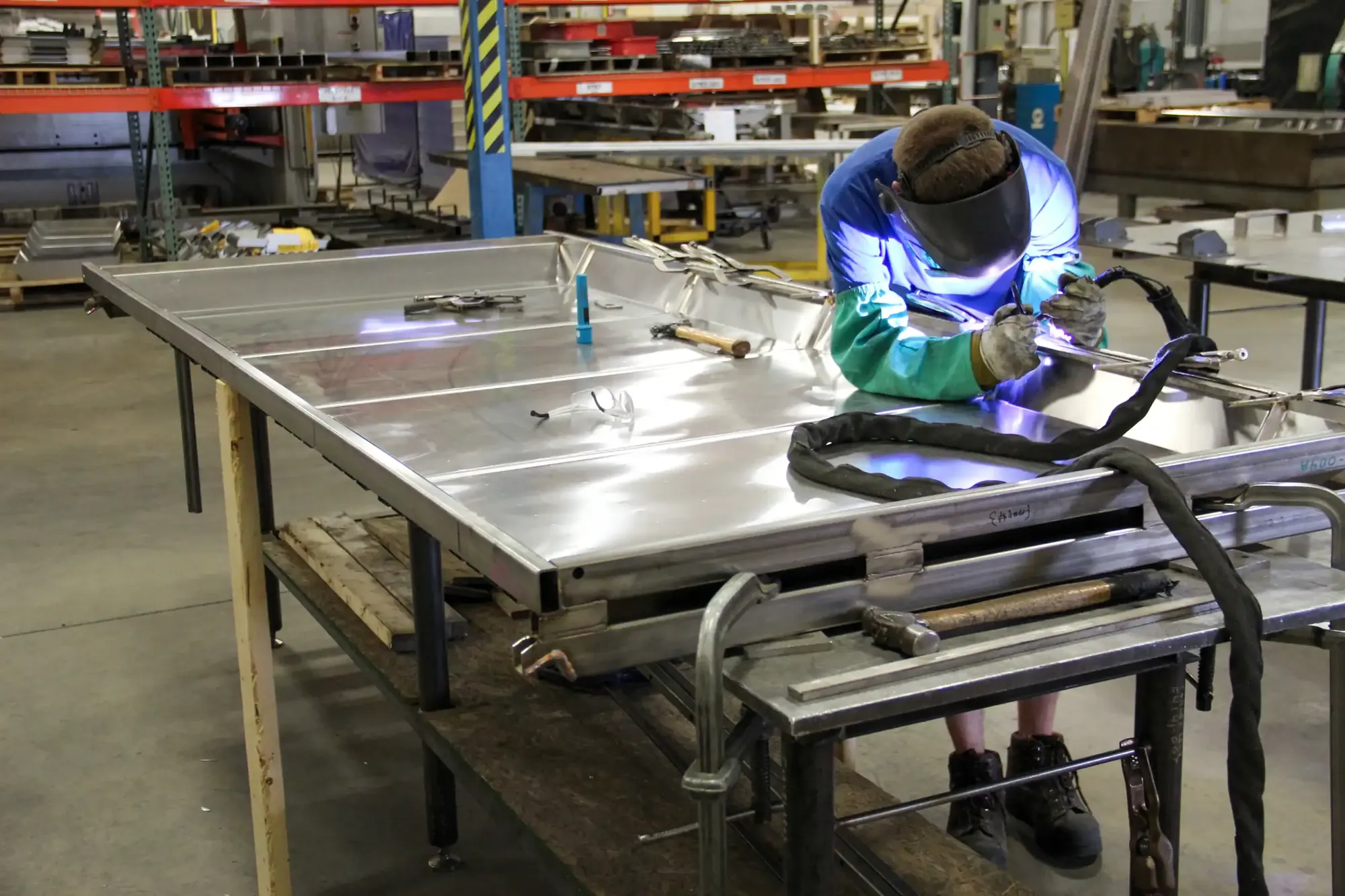
Thermal shortcuts destroy duplex toughness and pitting resistance. Every joint runs inside qualified procedures reviewed against your drawing, as detailed in our engineer's guide to duplex fabrication.
Keyhole GTAW (K-TIG) & controlled heat input
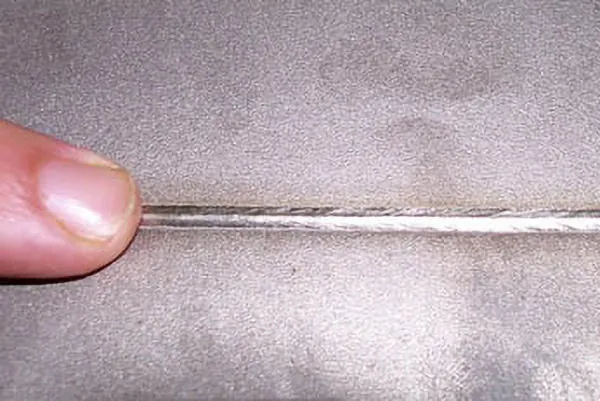
Too much heat pushes the weld toward excess ferrite; too little starves austenite reformation. Keyhole GTAW (K-TIG) cuts pass count and cumulative heat input, under procedures qualified on 2205 from 0.094 to 0.376 in (ASME IX) and on 2507 from 0.1875 to 0.75 in (AWS D1.6).
Interpass temperature enforcement
Duplex interpass limits are tighter than 300-series austenitics, especially on 2507. Welders monitor interpass temperature pass by pass to stay clear of the sigma-phase precipitation window.
Grade-matched WPS & over-alloyed filler
Procedures qualified under ASME BPVC Section IX (P10H for 2205, plus GTAW on 2507) and AWS D1.6 specify heat input, shielding/backing gas, and over-alloyed filler (ER2209 on 2205, ER2594 on 2507).
Forming, Rolling & Finishing
Springback compensation, one-piece rolling, in-house pickling
With roughly twice the yield strength of 316L, duplex requires higher tonnage at the brake and roll, followed by duplex-formulated pickling.
Heavy press brake forming
Five CNC press brakes handle the higher forming tonnage and roughly 2x springback behavior of duplex plate on stiffeners, saddles, and structural channels.
One-piece shell & cylinder rolling
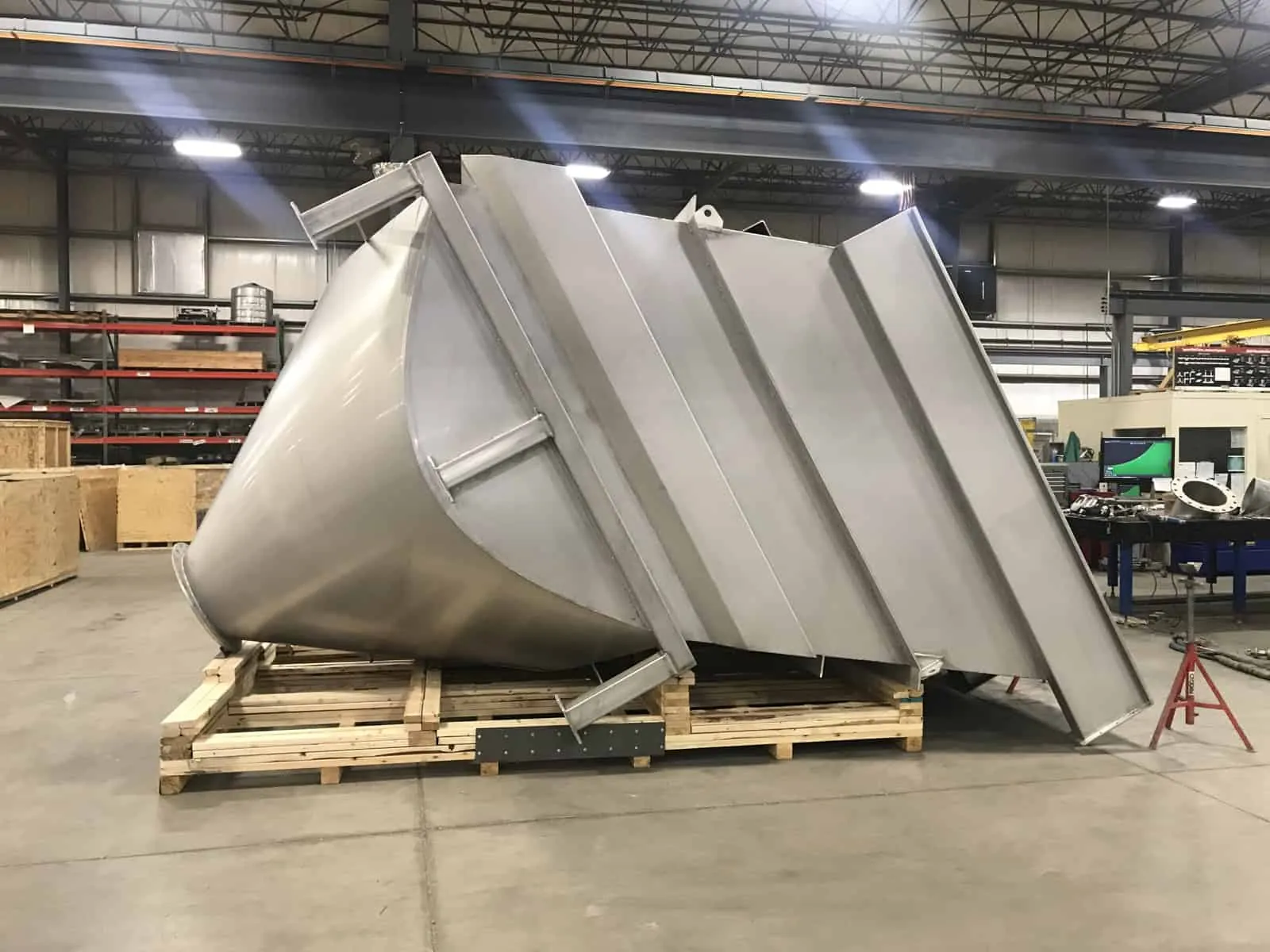
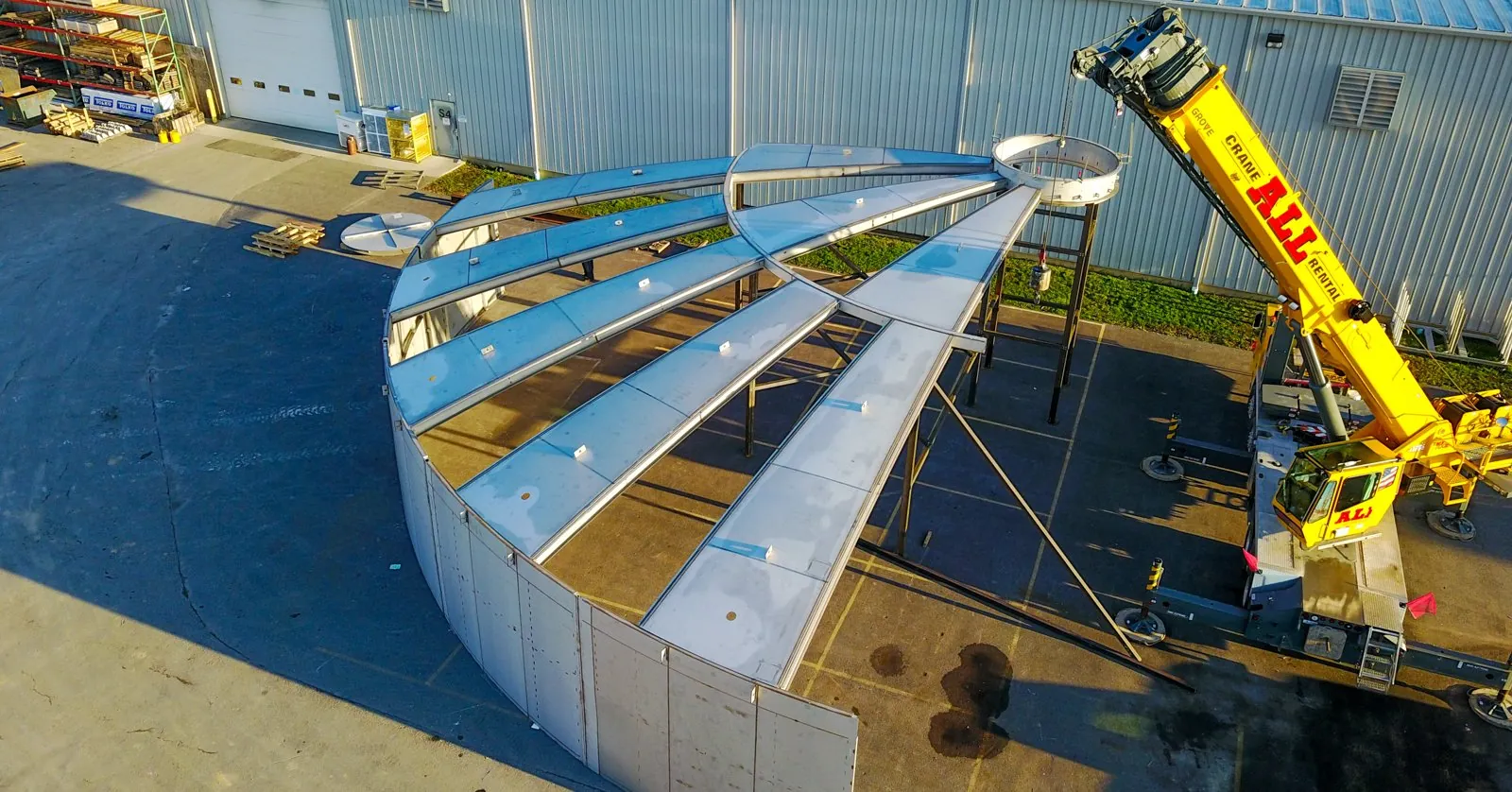
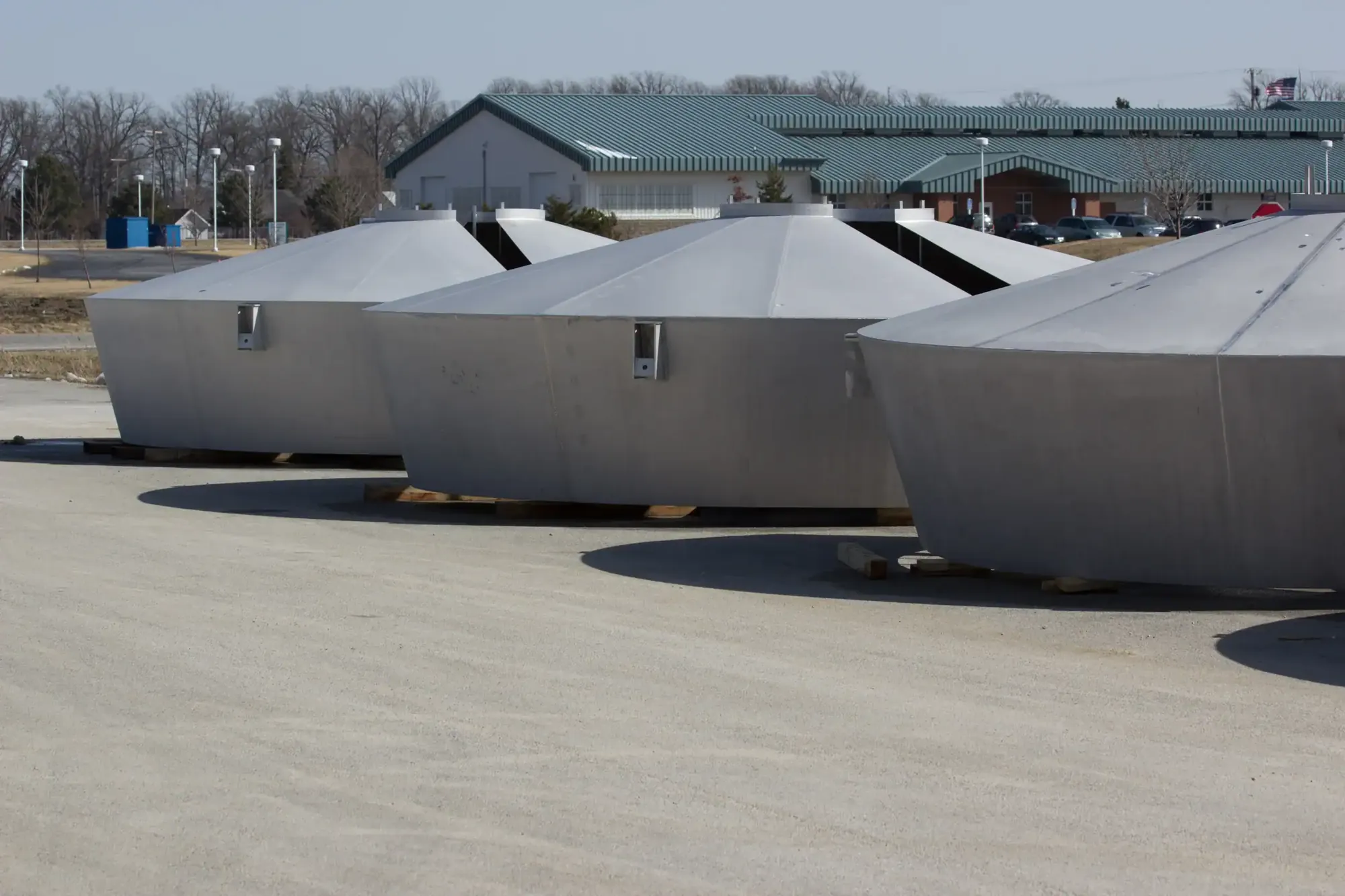
Duplex plate rolled in-house into one-piece cylinders and cones for custom low-volume tanks, clarifier troughs, and prefabricated pipe spools.
55-foot pickling & passivation
Post-weld pickling and passivation per ASTM A380 and A967 in our 55-foot drive-in booth removes heat tint and restores the passive film across whole assemblies.
Why Execution Matters
Duplex punishes shops that run it like 304L
Specifying 2205 or 2507 on the drawing only pays off if the shop holds the thermal window and restores the surface afterward. Compare lifecycle trade-offs in our duplex vs. 316L strength and TCO guide.
Before cutting plate, our CWI and welding engineering team check your joint thicknesses and code callouts against active Section IX and AWS D1.6 WPS coverage, flagging any new qualification needed during quoting.
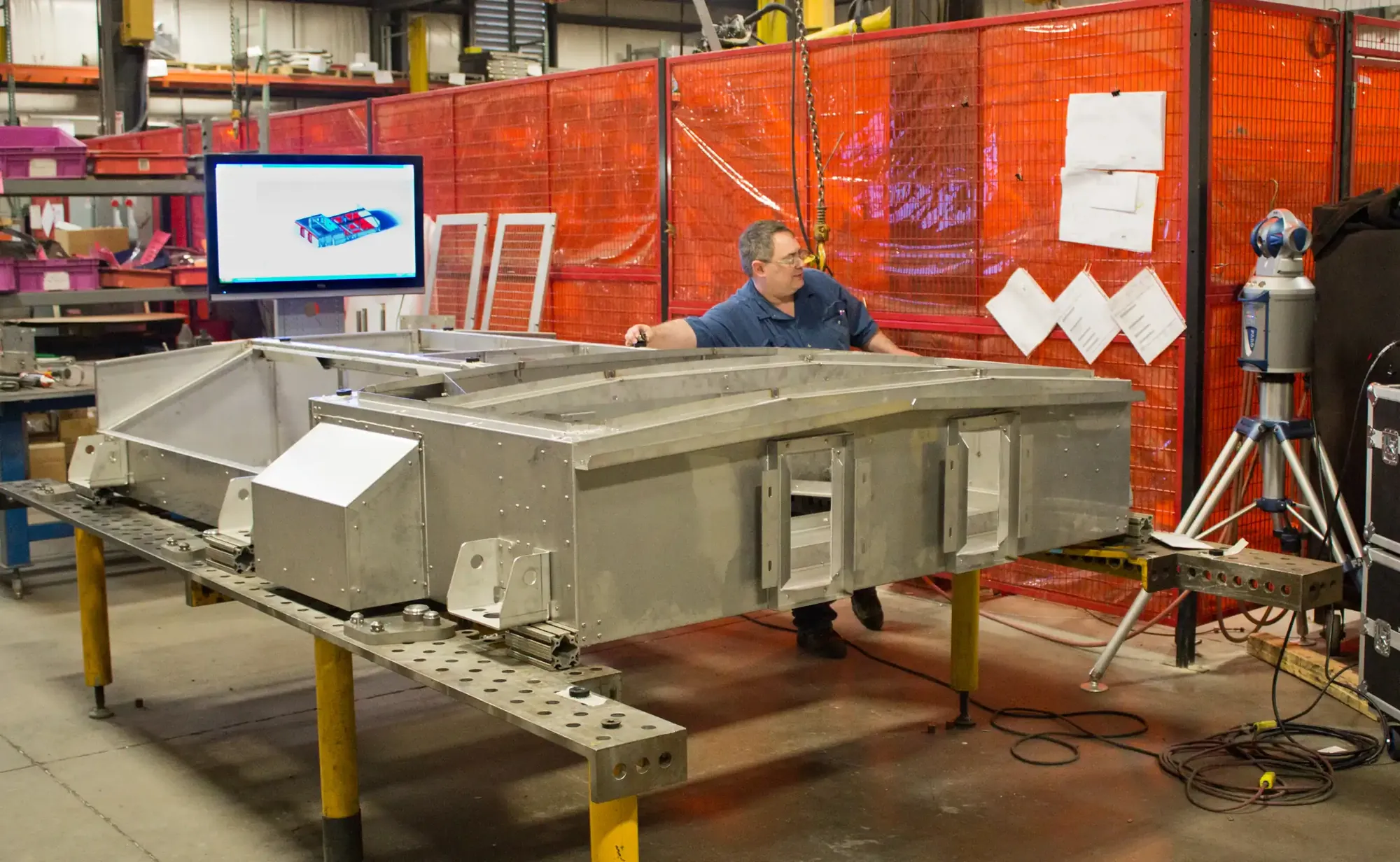
We hold rigid thermal controls across welding and forming, and measure ferrite content directly on production weldments rather than relying on qualification coupons alone.
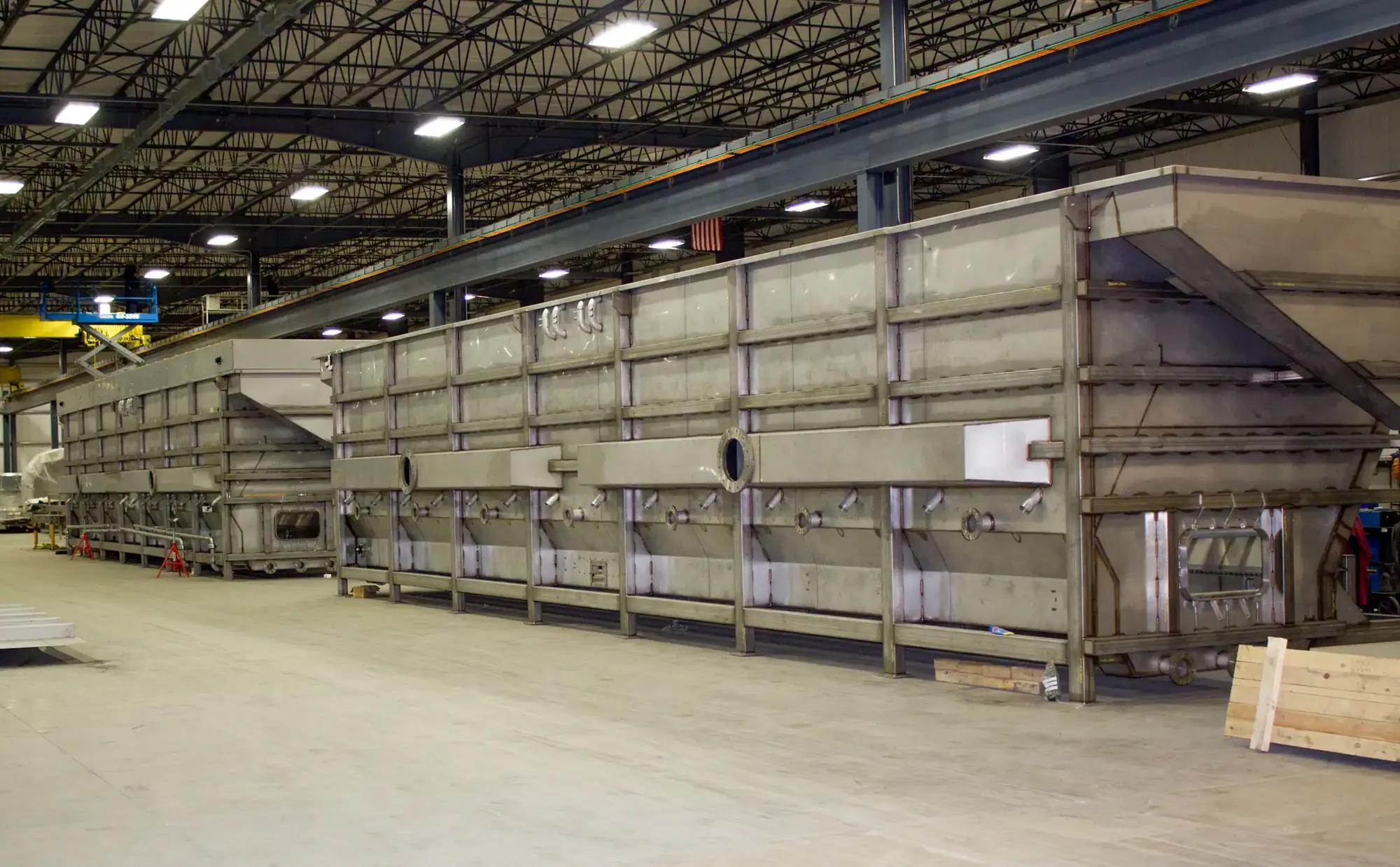
ISO 9001:2015 certified (#00157-4) with 60+ AWS-certified welders, a CWI on staff, and ASNT Level III NDE oversight inside a 40,000 sq ft dedicated stainless-only production space.
Quality Assurance
Duplex-specific inspection at every stage
Where It Runs
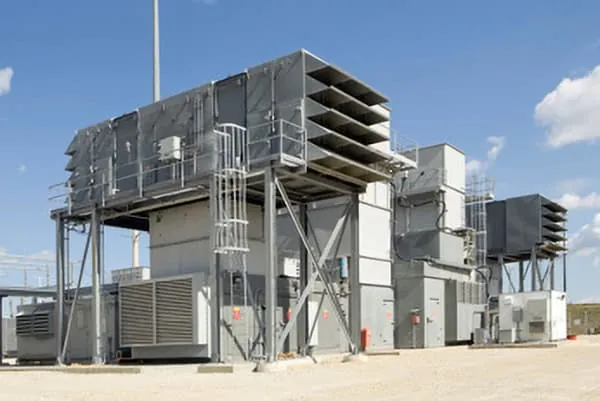
Industries that depend on duplex stainless
The grades that hold up where chloride, pressure, and strength-to-weight all matter at once.
Have a duplex stainless project on the board?
Other Materials We Fabricate
Beyond the duplex family
Processes we run on this alloy
The in-house capabilities behind every build in this alloy, from laser cutting to final passivation.
Frequently asked questions
What engineers and procurement managers ask us about duplex stainless steel fabrication: 2205, 2507 & ldx 2101.
How much stronger is 2205 than 316L, and how does its PREN compare?
2205 carries roughly twice the yield strength of 316L, so you can specify thinner sections at the same load. On corrosion, 2205 runs a Pitting Resistance Equivalent Number (PREN) near 35 against roughly 24 for 316L, so it tolerates higher chloride exposure before pitting. If your spec is open, send your drawing and service conditions during quote review and we can compare 2205 against 316L for the part.
What PREN do I need for seawater-class chloride service?
Seawater and severe chloride service generally call for a super duplex with a PREN around 40 or higher. 2507 runs a PREN near 43, which is why engineers specify it for desalination components, seawater handling, and high-temperature chloride environments. Send the drawing, service chemistry, and temperature and we will confirm weld procedure coverage for 2205 or 2507.
Why does sigma phase matter so much on 2507?
Sigma phase is a brittle intermetallic that precipitates when duplex dwells too long around 600 to 1000 C, and the higher chromium and molybdenum of 2507 makes it precipitate faster than on 2205. Even a small fraction collapses toughness and corrosion resistance. We control it by holding heat input and interpass temperature inside the qualified band on every pass, keeping the weld and heat-affected zone out of the precipitation window.
How do you verify the ferrite-austenite balance on duplex welds?
Ferrite is measured on production weldments with calibrated instruments, not only on qualification coupons. Target bands come from qualified procedures (ASME BPVC Section IX P10H on 2205; Section IX and AWS D1.6 on 2507), and verifying ferrite on actual production welds confirms that heat input and interpass control held the roughly 50/50 balance duplex requires.
Which filler metals do you use for duplex welding?
Standard duplex such as 2205 is welded with an over-alloyed filler like ER2209, which adds nickel to drive austenite reformation so the deposit matches the base-metal balance. Super duplex such as 2507 uses a matching super duplex filler like ER2594. The filler is specified in the qualified WPS for each grade.
Can you fabricate ASME code piping or pressure vessels in duplex?
When your drawing invokes ASME code, Northern holds the ASME PP stamp (Certificate #63198) for fabrication and assembly of pressure piping and the ASME U stamp (Certificate #63199) for manufacture of Section VIII Division 1 pressure vessels, both scoped to shop fabrication at our Oak Harbor, Ohio facility with Hartford Steam Boiler as the Authorized Inspection Agency. Send your drawing so our quality team can verify exact WPS coverage for the grade and thickness before quoting.