Northern Manufacturing
Quote
Menu
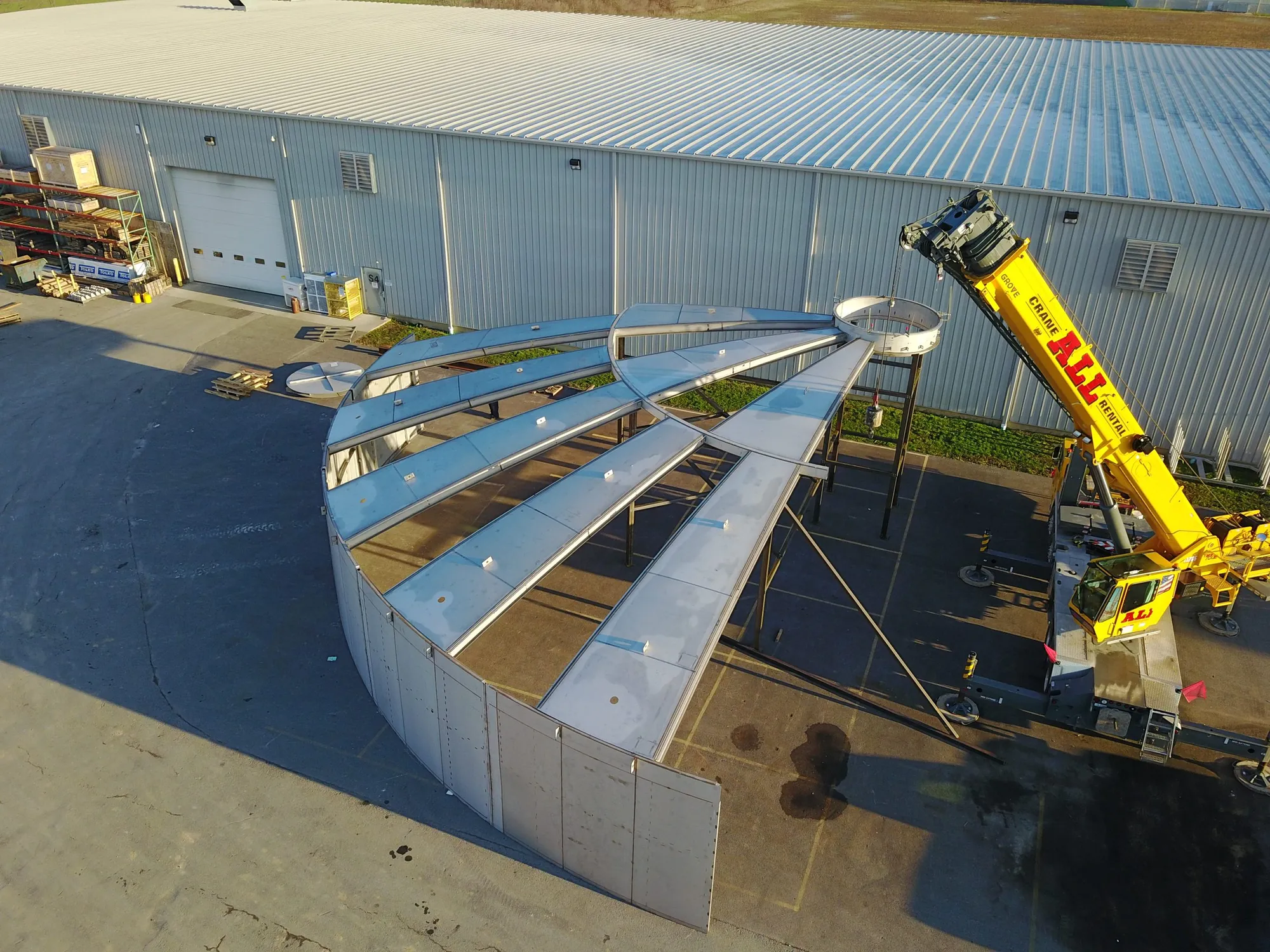
Stainless steel wastewater digester cover trial-fit in the yard at Northern Manufacturing
Part of Stainless Fabrication

Stainless Steel Fabrication for Water and Wastewater Treatment

Large treatment-plant weldments, welded and rolled to hold tolerance and pickled to hold their corrosion resistance.

Qualified ISO 9001:2015 AWS D1.6 ASME BPVC Section IX
Docs available MTRs Weld maps WPS/PQR NDE PMI CoC
100 ft

Longest Single Trough

60 +

AWS-Certified Welders

55 ft

Passivation Spray Booth

1951

Fabricating Since

The Challenge

Corrosion resistance, held at scale

Treatment equipment has to do two hard things at once: keep its corrosion resistance in constant aqueous service, and hold tolerance across spans most shops fabricate in pieces. Both are fabrication problems, not materials-catalog problems.

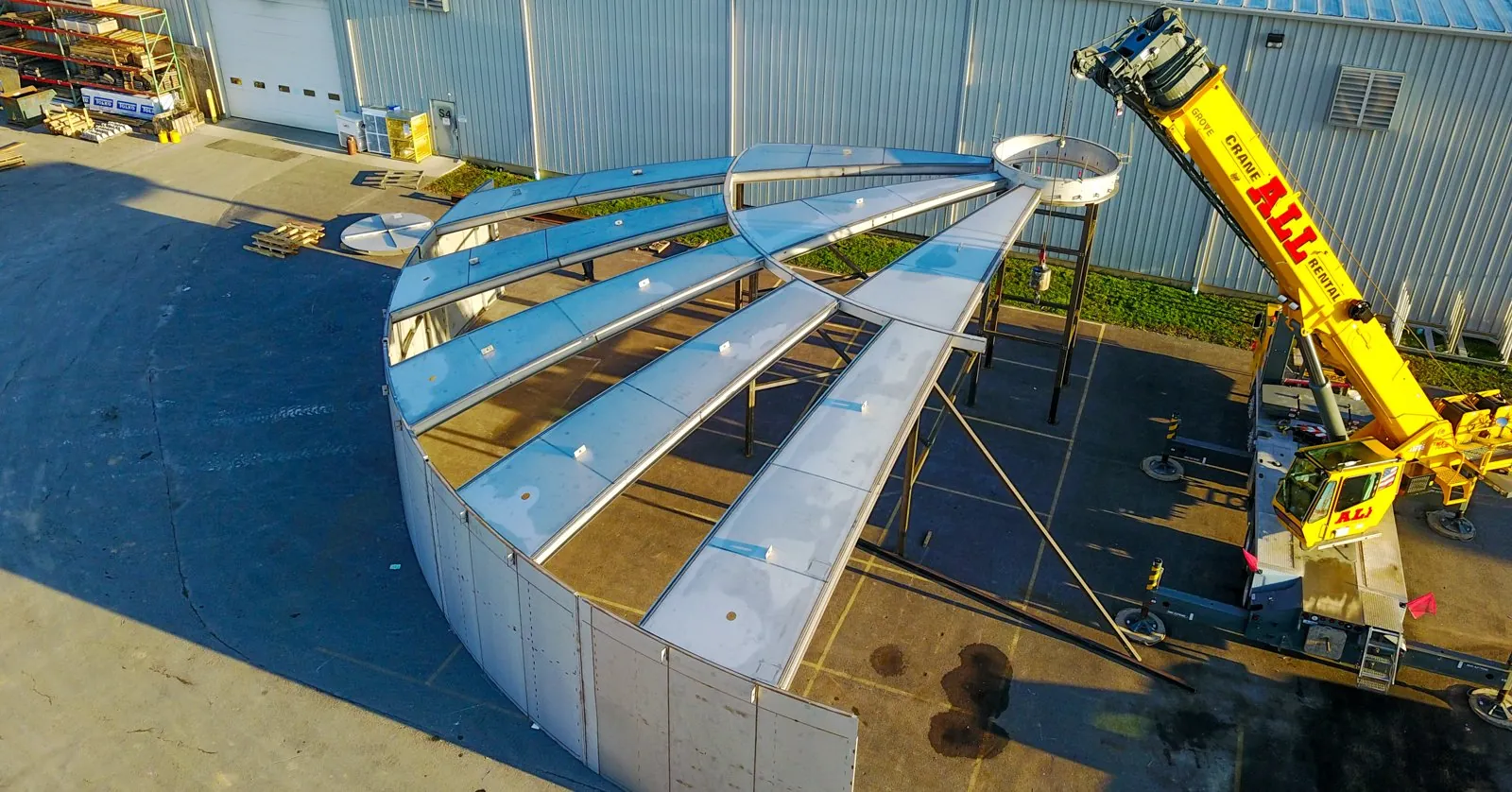
Aerial view of a large stainless steel clarifier section assembly staged outside the Northern Manufacturing shop with a crane

Weld integrity and the passive layer

Every weld on a wetted surface is a corrosion initiation site. We run ASME BPVC Section IX qualified procedures, control heat input to avoid sensitization, and can restore the passive layer on every weld with in-house pickling and passivation per ASTM A380 and A967.

Free-iron control for potable and process water

Carbon contamination seeds pitting in service. Fabrication runs in a 40,000 sq ft stainless-only space, and we can run free-iron verification per ASTM A380 on potable-service equipment to confirm clean wetted surfaces.

Distortion control over long spans

Welding heat pulls long stainless assemblies out of line. We hold straightness with laser-aligned sectional fit-up, controlled weld sequencing, and jigging engineered for the part. Measured results are documented on the wastewater trough case study.

Troughs, weirs, clarifier components, and dosing skids in 304L, 316L, and duplex 2205, rolled to hold straightness and pickled as a whole assembly.

Northern Manufacturing fabricates custom stainless steel equipment for municipal water treatment plants, industrial wastewater facilities, and OEMs building treatment systems. Common materials: 304L for potable water service, 316L for chlorinated or mildly corrosive environments, and duplex 2205 for high-chloride or seismically loaded applications. All work runs through our 40,000 sq ft stainless-only production space, where dedicated tooling prevents carbon contamination on corrosion-critical assemblies.

60+ AWS-certified welders. ISO 9001:2015 certified (AVU Registrations). ASME BPVC Section IX qualified welding procedures for austenitic (P8) and duplex (P10H) stainless. In-house pickling and passivation per ASTM A380/A967 in a 55-foot spray booth. CWI on staff.

Equipment We Build for Water and Wastewater
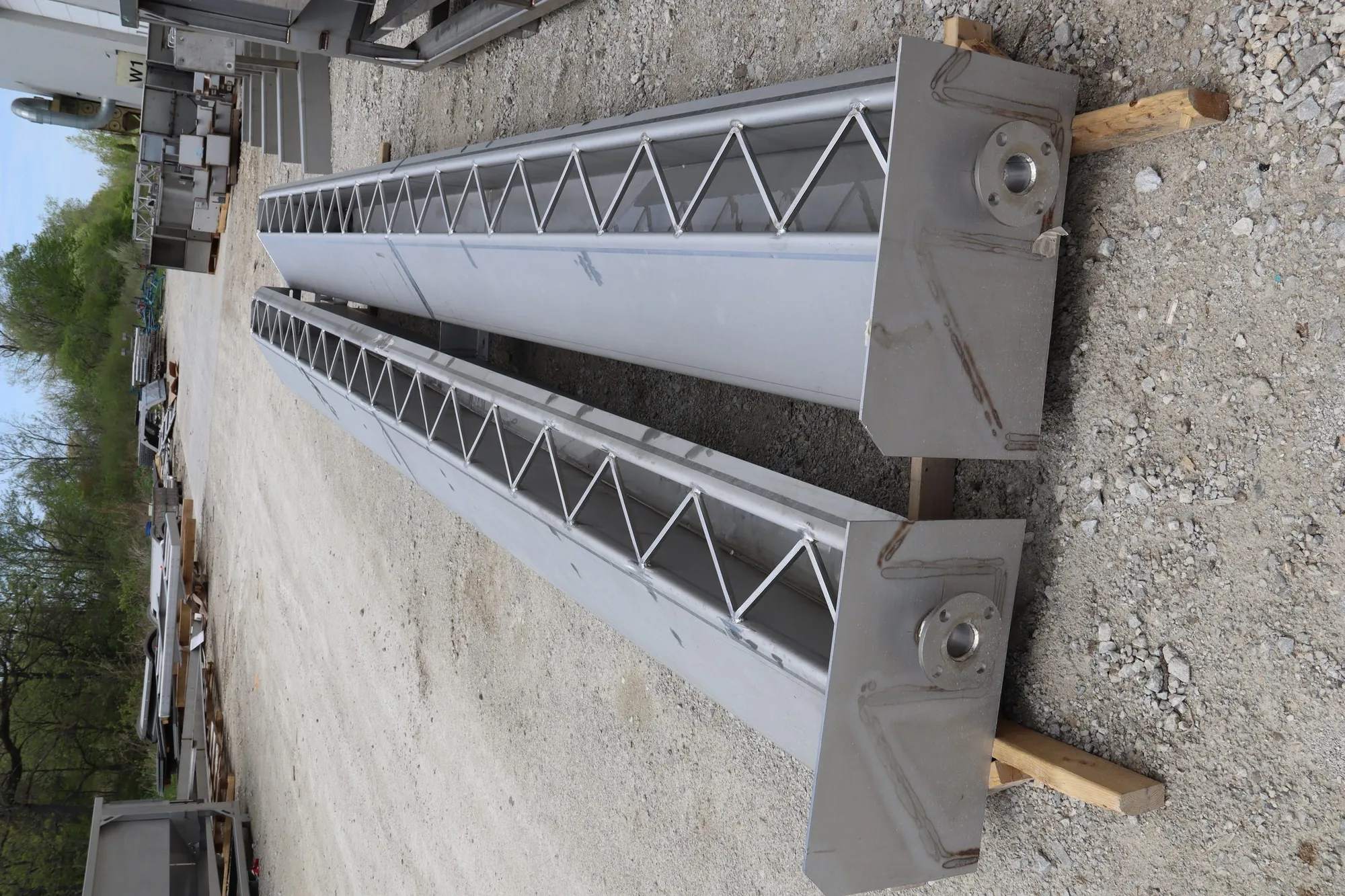
Stainless steel weir trough sections with v-notch pattern staged for shipment

Troughs & Weirs

Long-span stainless troughs for clarifiers and settling basins, welded and checked for straightness before shipment.
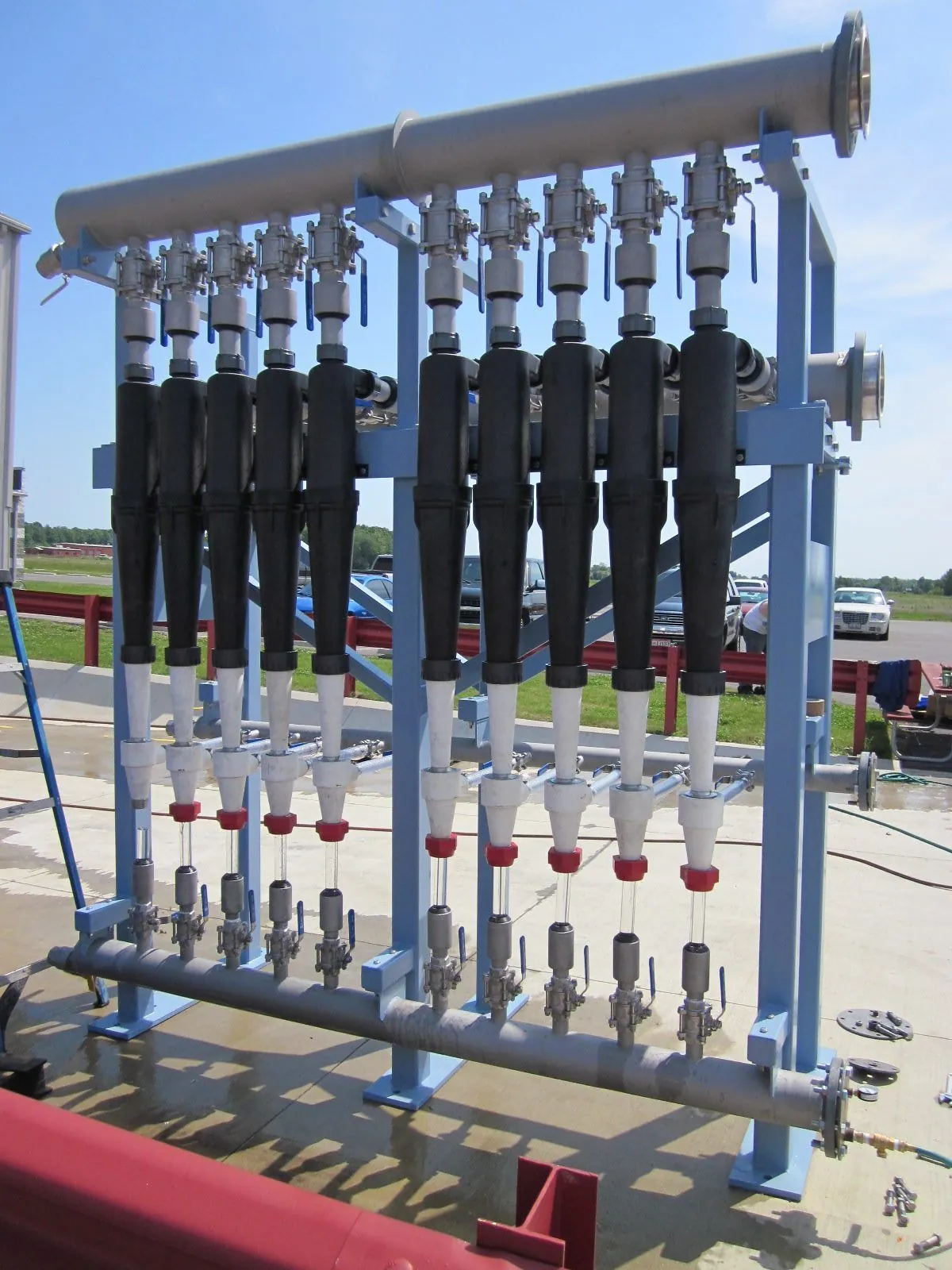
Skid-mounted chemical injection manifold with stainless headers and valve assemblies

Chemical Dosing Skids

Skid-mounted stainless systems with piping, valving, metering pumps, and containment, fabricated as a unit and tested before shipment.
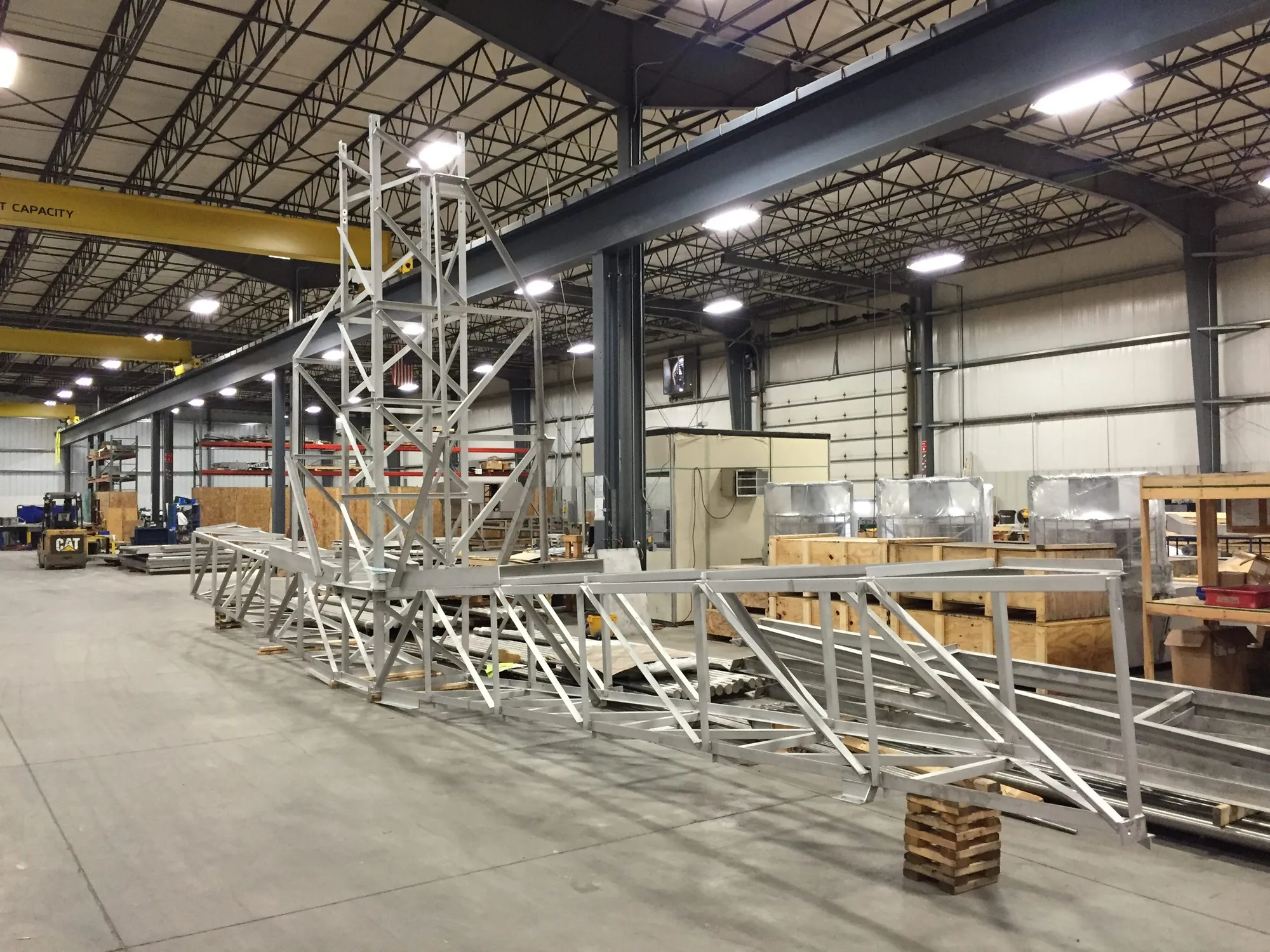
Aluminum access catwalk structure during trial-fit in the Northern Manufacturing fabrication bay

Clarifier & Thickener Components

Rake arms, baffles, weir plates, and overflow structures in 304L or 316L.
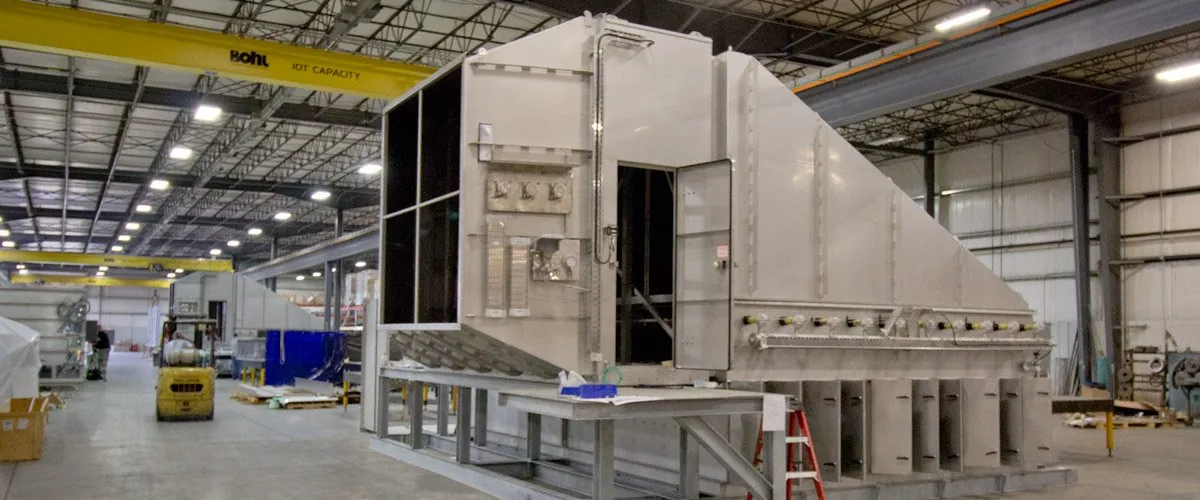
Stainless steel dissolved air flotation treatment unit during fabrication at Northern Manufacturing

Filter Housings & Membrane Frames

Structural stainless fabrications supporting filtration modules, built to tight dimensional tolerances for field alignment.
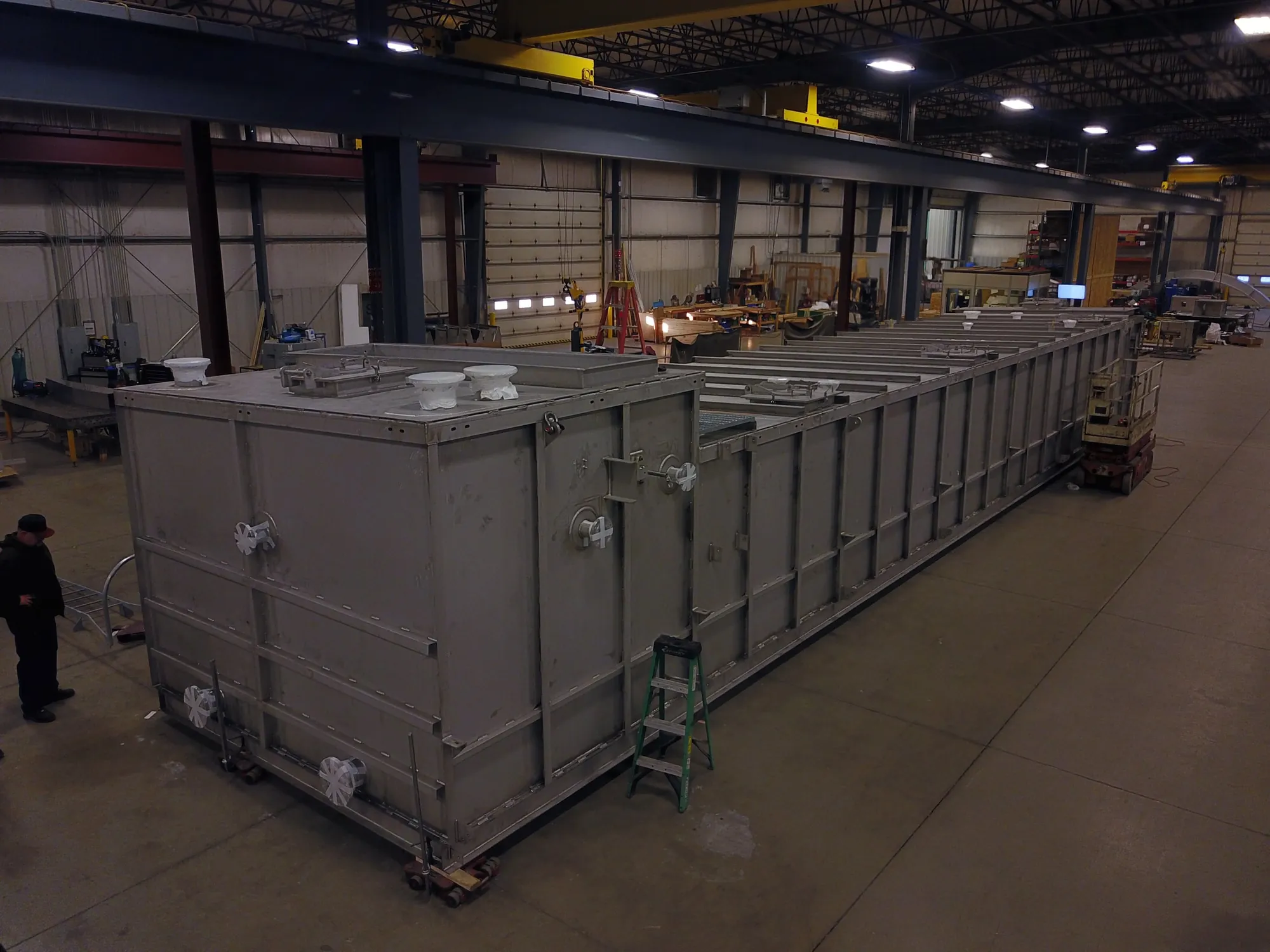
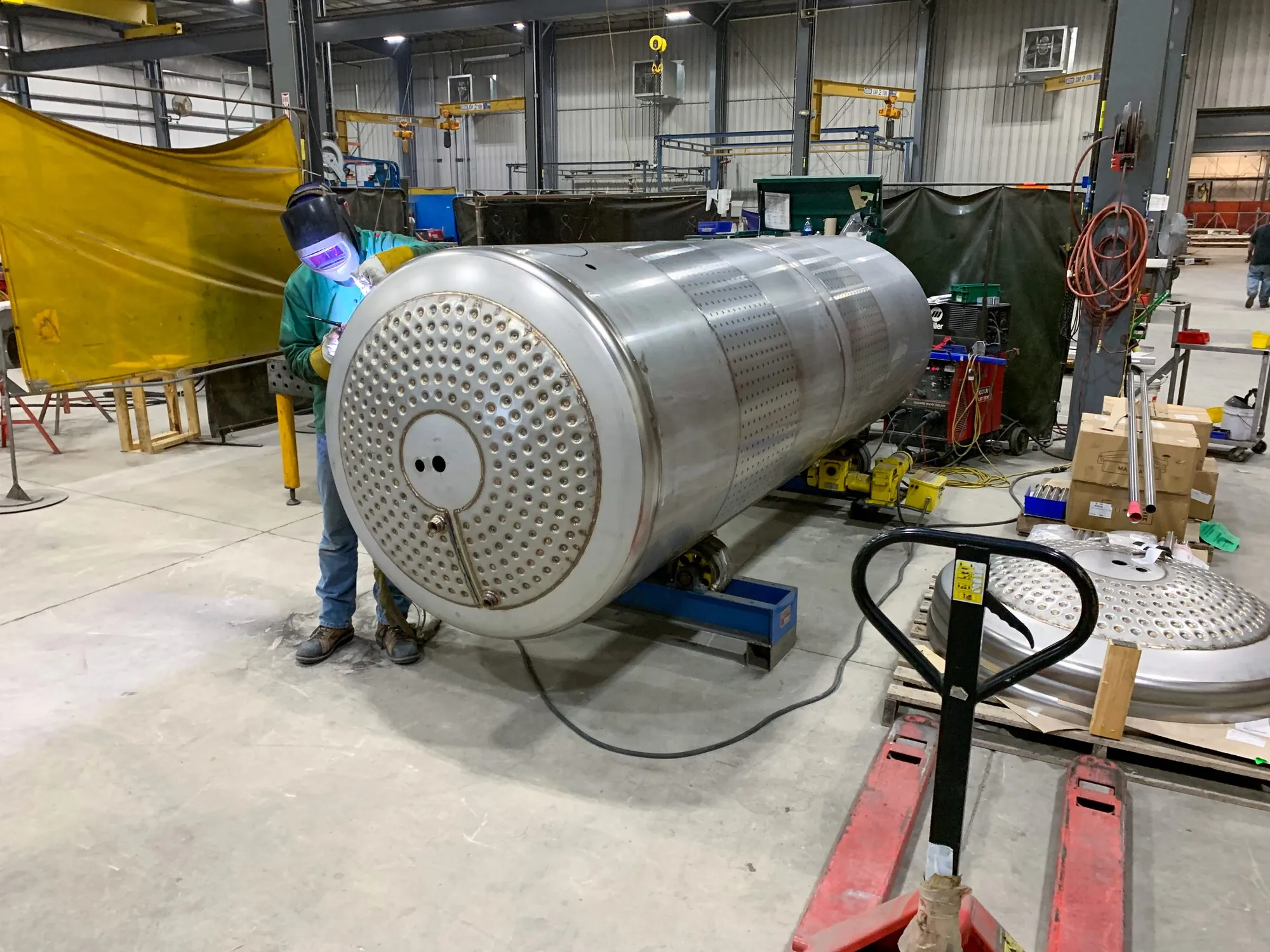
Large stainless steel wastewater tank on the Northern Manufacturing shop floor, with a fabricator alongside for scale

Storage Tanks & Mixing Vessels

Atmospheric and low-pressure tanks in 304L, 316L, or duplex 2205 depending on the chemical environment and chloride exposure.
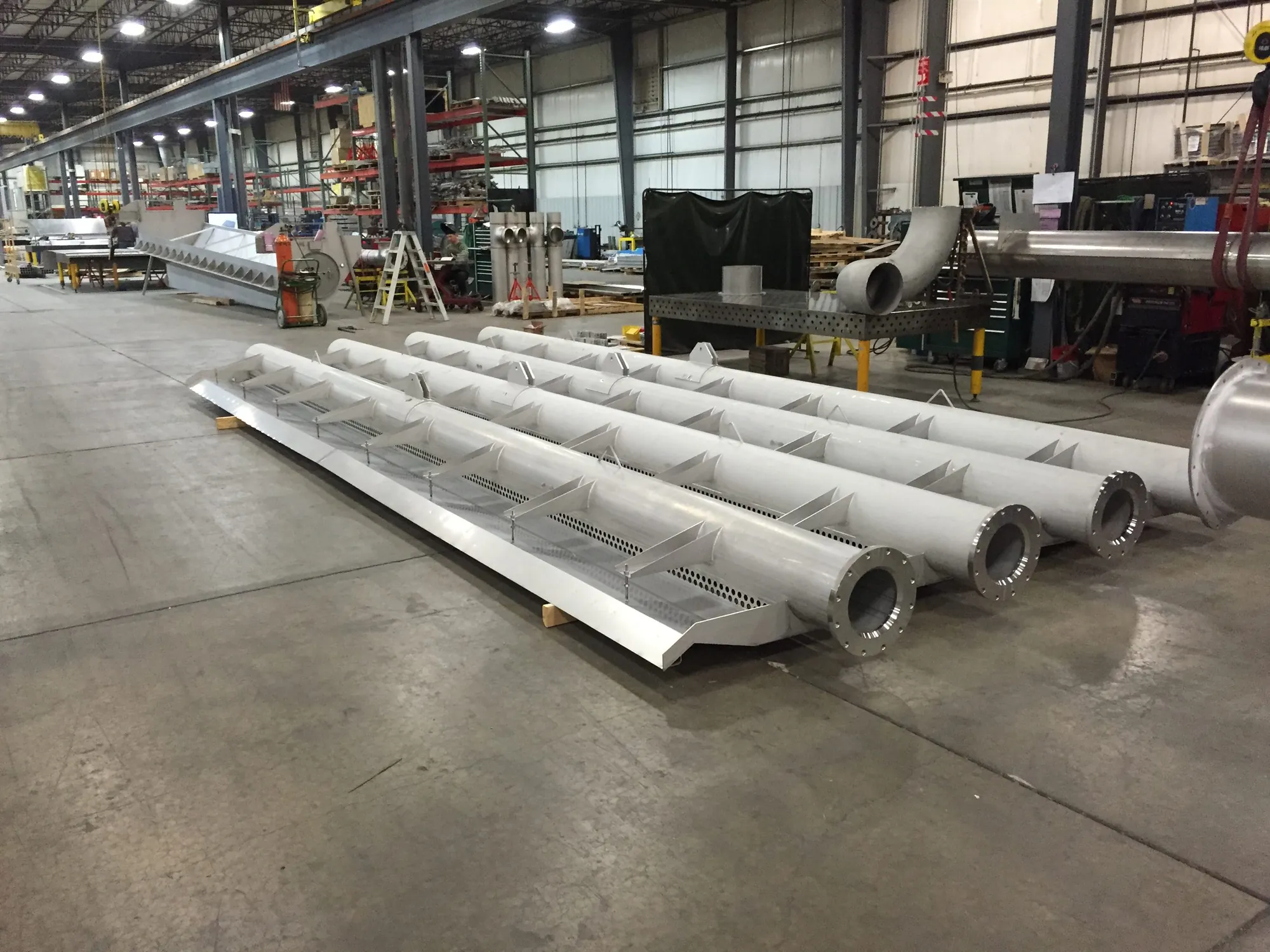
Stainless steel multi-pipe header assemblies staged on the shop floor

Pipe Spools & Process Piping

Prefabricated pipe spools with full weld documentation and fit-up verification before shipment.

Stainless Grades for Water Service

Most projects arrive with the grade already specified, and we build to it; when the spec is open we will point you to a starting grade for the service, but the value we add is in the fabrication. Grade choice tracks chloride content, temperature, and whether the equipment contacts potable water or process wastewater. Duplex 2205 delivers roughly twice the yield strength of 304L at comparable corrosion resistance, which allows thinner wall sections on large tanks and reduces both material cost and installation weight. The trade-off is fabrication discipline: duplex requires controlled heat input and interpass temperatures to maintain the 50/50 austenite-ferrite balance.
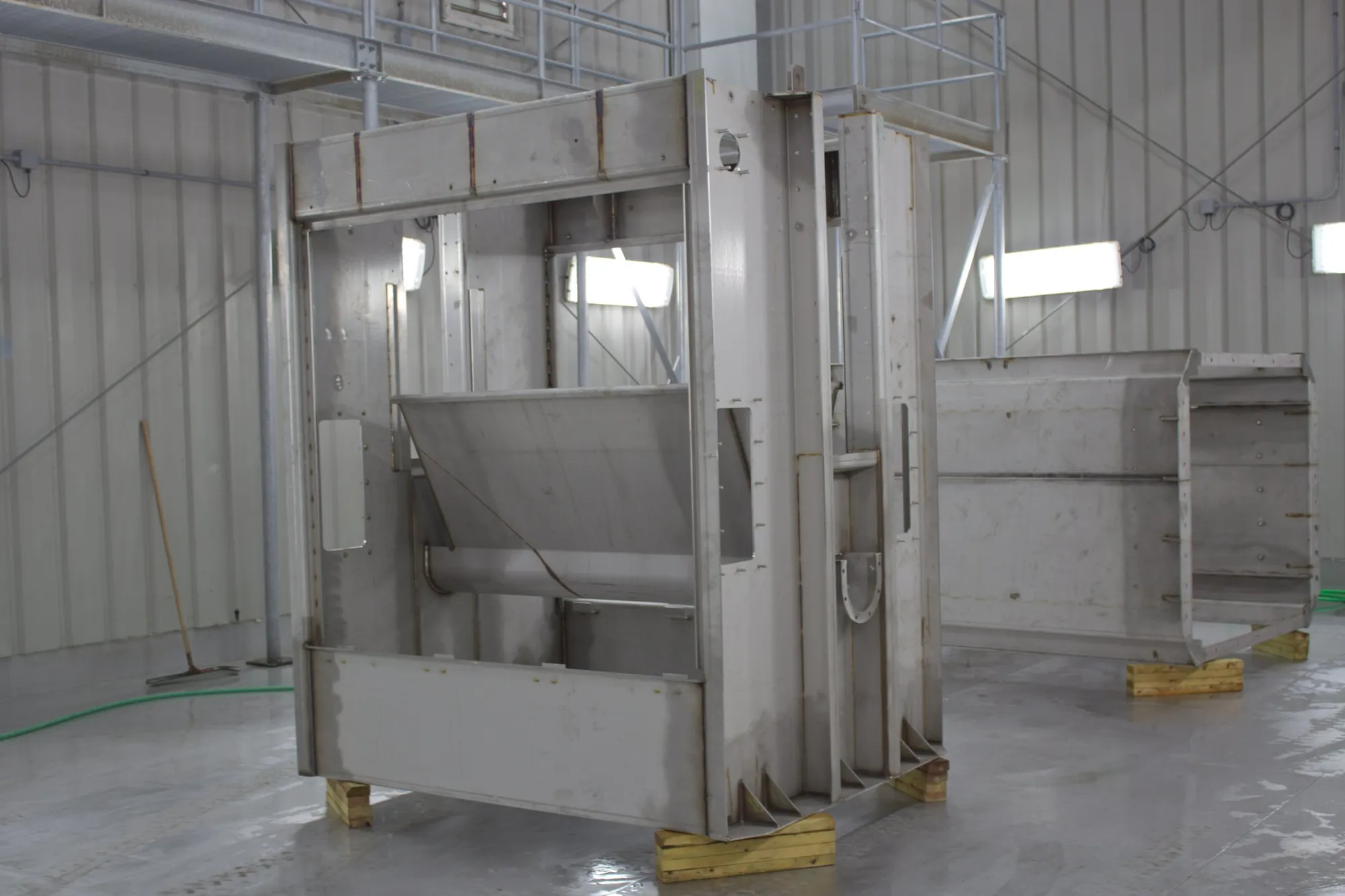
Welded stainless steel frame structure with an internal hopper chute, blocked up on wood cribbing on the Northern Manufacturing shop floor
Grade Chloride range Typical application Strength vs. 304L
304L Low chloride (under 200 ppm) Potable water contact, structural supports Baseline
316L Moderate chloride (200 to 1,000 ppm) Chlorinated process water, chemical dosing Similar
Duplex 2205 High chloride (above 1,000 ppm) Seawater-cooled systems, brine contact, seismic loading ~2x yield strength

Welding for Corrosion-Critical Service

Every weld on a water-contact surface is a potential corrosion initiation site. Northern controls weld quality through ASME BPVC Section IX qualified procedures for both austenitic (P8) and duplex (P10H) stainless.

For austenitic grades, we control heat input to prevent sensitization in the heat-affected zone. For duplex, we maintain interpass temperature and use ER2209 matching filler to preserve the ferritic-austenitic microstructure. Ferrite content is measured on production weldments, not just test coupons.
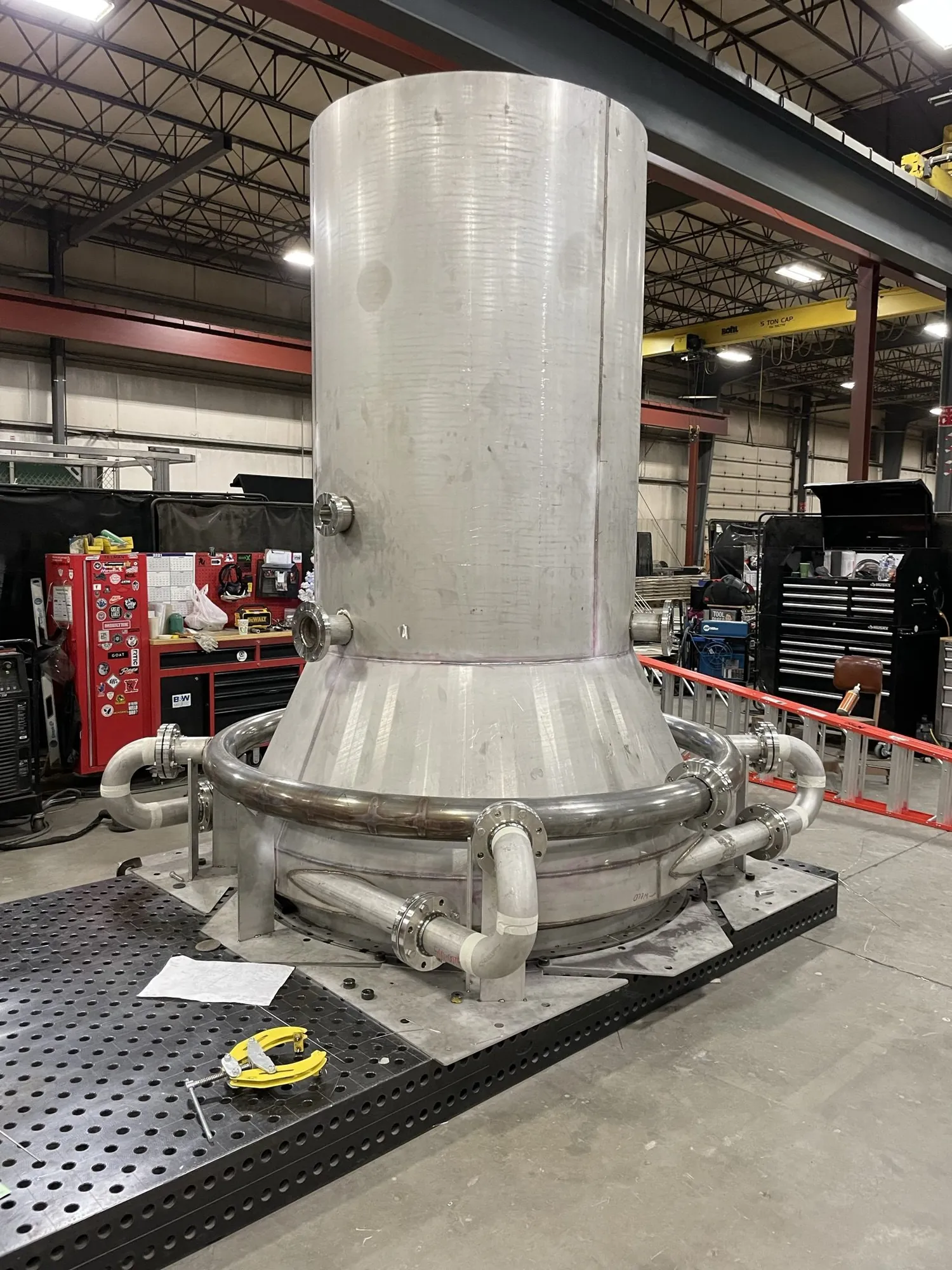
Tall stainless steel cylindrical vessel with a conical base and a looped ring of flanged pipe connections on a fixture table in the Northern Manufacturing shop

Surface Restoration and Passivation

Post-weld pickling removes heat tint, embedded iron, and surface contamination that would otherwise initiate corrosion in service. Our 55-foot spray booth handles entire assemblies in one pass per ASTM A380 and ASTM A967. No sectioning, no re-welding after treatment. For equipment entering potable water service, free-iron verification per ASTM A380 is available on request to confirm the absence of surface contamination.
Documentation Available on Request

Documentation we can provide as your specification requires:

Material Test Reports (MTRs) traced by heat number
Welder continuity logs confirming qualification at time of fabrication
Pickling and passivation certification per ASTM A380/A967
Weld maps with WPS references for every joint
Dimensional inspection reports per your drawing tolerances
NDT reports (radiographic, ultrasonic, or dye penetrant as specified)

Water & Wastewater project

Proof on a real assembly for this industry.

100-foot 304L stainless steel trough for wastewater treatment

Water & Wastewater

A 100-foot stainless trough, straight within 1/8"

Delivered straight within 1/8 inch over 100 feet, tighter than spec. Installed without field rework.

Regional wastewater authority needed a 100-foot 304L stainless trough to replace a failed unit during a planned outage. Straightness was specified within 1/8 inch over the full 100-foot length. The previous fabricator couldn't hold tolerance over the span.

304L Stainless Steel

Have a stainless project for water & wastewater?

Or call (419) 898-2821

Request a Quote

Shop capabilities for this industry

Every water & wastewater project draws on specific fabrication processes. These are the ones we use most for this industry.

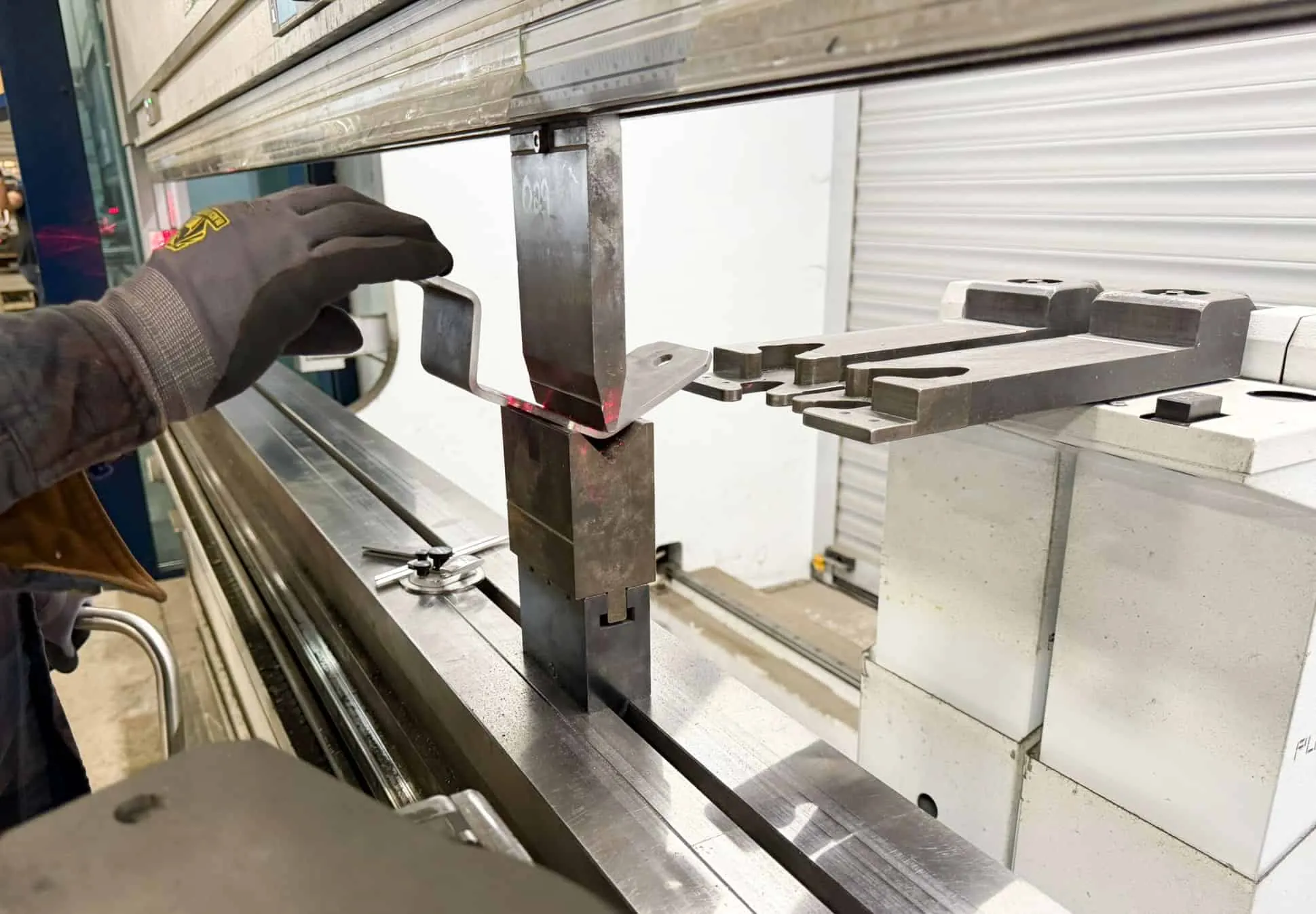
Operator forming a stainless steel bracket on a CNC press brake at Northern Manufacturing, with laser-cut blanks staged beside the dies

Precision Bending and Forming Services

Five CNC press brakes, two Trumpf TruBend 5320s among them, form stainless from sheet gauges through heavy plate, with springback compensation set per grade and formed dimensions verified against your CAD model before parts move to welding.

Northern Manufacturing welder running a manual GTAW pass on a stainless steel heat exchanger tubesheet

Stainless Steel Welding Services

60+ AWS-certified welders running ASME BPVC Section IX qualified procedures across nine processes (GTAW, GMAW, FCAW, SAW, robotic, K-TIG, and more) on stainless, duplex, and nickel alloys.

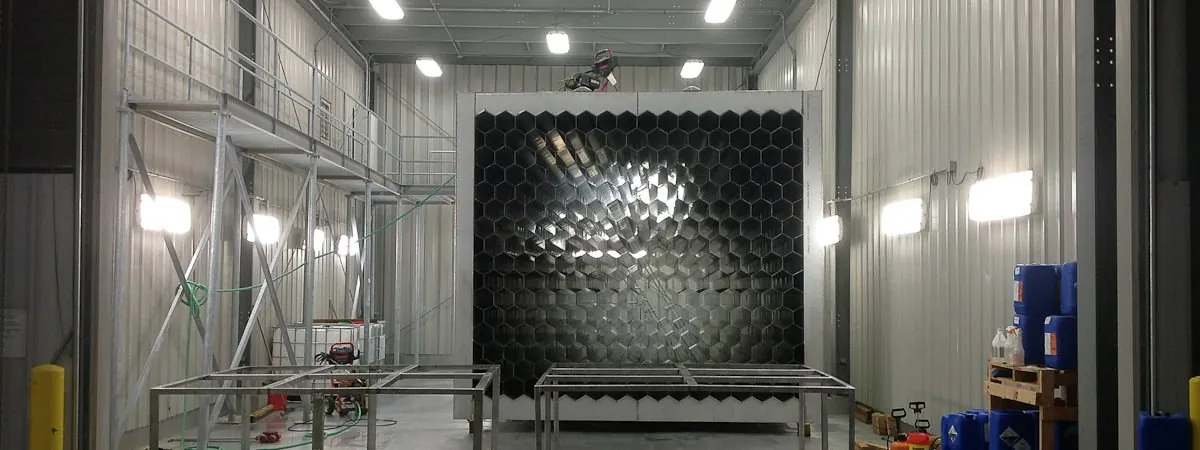
Massive hexagonal honeycomb tube bundle standing inside the 55-foot spray pickling booth at Northern Manufacturing

Stainless Steel Pickling and Passivation

Welding leaves stainless with heat tint, free iron, and a chromium-depleted layer that fails service life if it ships out the door. We pickle and passivate to ASTM A380 and A967 in a 55 ft booth, and run copper-sulfate verification (ASTM A967 Practice D) when your specification or purchase order calls for it.

Frequently asked questions

What engineers and procurement managers ask us about water & wastewater fabrication.

When does duplex 2205 justify its cost on a treatment project?

When chlorides or structural loads push 316L to its limit. Duplex 2205 resists the chloride stress corrosion cracking that austenitic grades develop in high-chloride service, and roughly twice the yield strength of 304L allows thinner walls on large tanks, which often offsets the material premium. We weld it with ASME BPVC Section IX qualified P10H procedures, ER2209 matching filler, and ferrite measurement on production weldments.

How straight can you hold a long trough or weir?

Distortion on long runs is controlled before the first arc strikes: laser-aligned sectional fit-up, custom jigging engineered for the length, and heat input managed through qualified weld procedures. Dimensional inspection against your drawing confirms the result before anything ships. For a documented long-span example, see the [wastewater trough case study](/case-studies/water-treatment-tank/).

Can you ship oversized assemblies to a plant site?

Yes, with planned logistics. Assemblies up to 48 feet long move on standard and stretch trailers, and larger or taller pieces are quoted with the cranes, permits, and route planning they require rather than discovered at shipment. Tank-style equipment that must travel or set upright gets its handling reviewed during the quote, so the installation plan is part of the price.

How do you confirm equipment is clean before potable water service?

Free-iron verification per ASTM A380 on critical-service assemblies, after pickling and passivation per ASTM A380/A967 in our 55-foot spray booth. Fabrication runs in a 40,000 sq ft stainless-only production space, so carbon contamination is prevented by separation first and then verified by test. When your spec requires it, the passivation certificate and verification records are provided with the equipment.

Send us a drawing. We'll tell you what it takes.

No commitment. We will review your drawing and tell you the grade, the process, and what it takes to build it.